Inside Movement Medicine: Meet Macole
Meet Macole Lannaman – an embodied practitioner, researcher, and community organiser based in Sheffield and a member of the Movement Medicine cohort. Movement Medicine is a multi-year commitment to deepen in embodied practice alongside other organisers, movement workers, cultural workers, and healthcare providers. It is a shared political project for the sake of sustaining and supporting our movements.
In this series we explore why people have chosen to make, and stay with, this commitment, how it has impacted them individually and its importance in building towards liberated futures. Here, Macole speaks with Movement Medicine Senior Programme Lead Nishma Jethwa about his journey so far.
Nishma: Can you describe what politicised somatics / embodied leadership is in your own words?
Macole: So for me, politicised somatics is a way of understanding and exploring yourself. And when I say yourself, I mean the soul, the “us” in our wholeness, the body in our wholeness. Not just the physical limbs, but our mind, our body, our spirit and the land – understanding that in its wholeness, and doing that within a political context.
~
Politicised somatics is a way of understanding ourselves within a political context – to listen to how our bodies and our whole selves have been shaped by our contexts and use those learnings to move towards liberation, freedom and justice.
~
And for those of us who are in this work to heal communities, this understanding of collectiveness is imperative as it reminds us that trauma and oppression is also held collectively within groups, thus our healing must be collective based rather than solely individual.
From a young age, I’ve always been kind of passionate about equality and social justice as well as freedom, balance and harmony. And over the last decade, my energy has kind of just been moving more deeply towards that. And I actually, genuinely, genuinely believe that my purpose in this lifetime is to to build up community and to bring balance to this world. I genuinely believe that’s my assignment, and I’ve been told that. I think my ancestors are continuously telling me that. So that’s kind of who I am and how I move.
Nishma: I’d love for you to share a little about your research and also what you’re learning about embodied transformation and how it’s important in your work and in building towards liberated futures / its role in our movements.
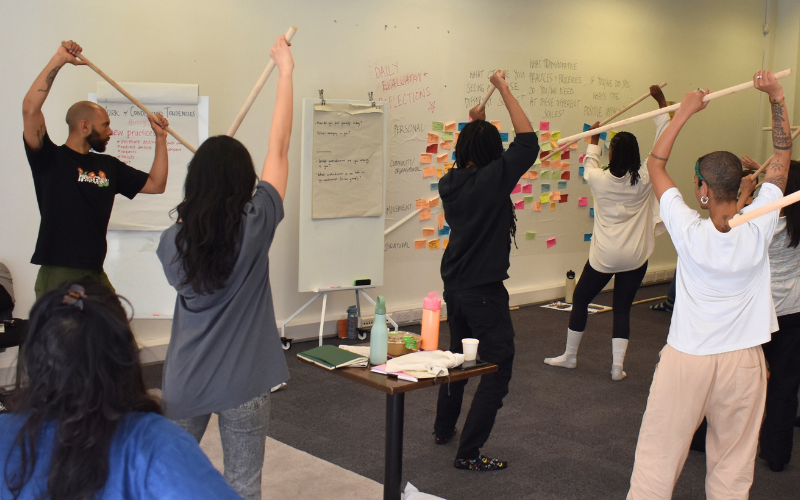
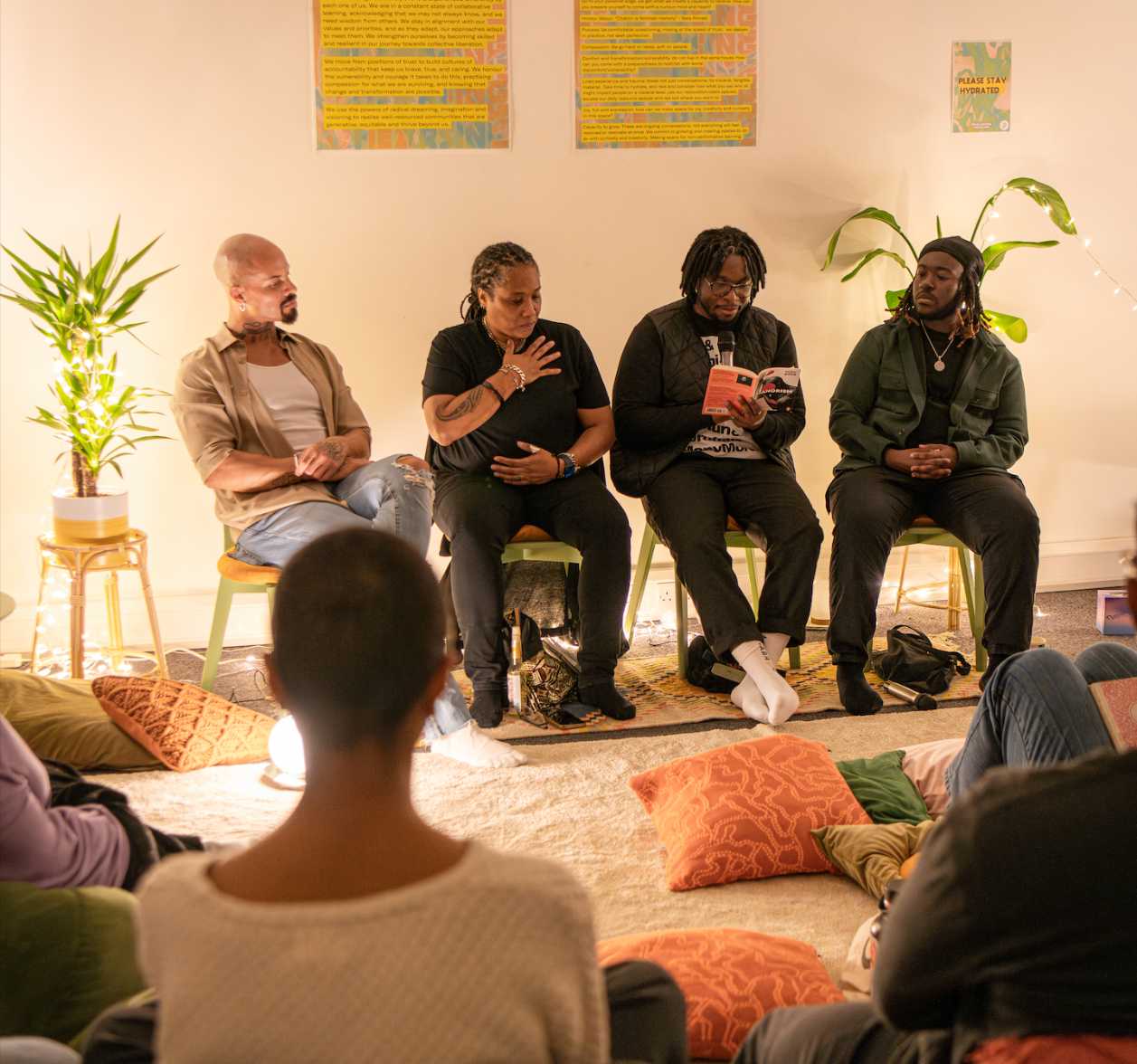
Photo by inaya
Macole: So my research is looking at the somatics of racism in schools. A lot of analysis of the impact of racism is often looking at the structural level or at the interpersonal level. And I guess what I want to recognise is that there’s also an additional layer in which racism and oppression impacts people – in the body. Historical oppression and racism has embodied impacts on our people, and I wanted to see how that operates within the school setting.
So the research involved going to schools with young people and observing them in class, seeing their body language – how they walk and how they talk and how they dress, speaking with them and asking them how their body feels in certain settings or around certain sets of people. For instance, how do you feel when you go into a classroom and you’re the only Black student in there? How does that feel in your body? How do you navigate that? And so through the research, I’ve been learning many different ways in which young Black people within school settings relate to their body, experience their body, but also use their body as a form of resistance and as a way to find joy as well. So for me, this understanding of the body as a site of freedom is essential as we seek social justice.
For me, change starts from the self. It’s so easy for us to always go out into the macro and external to create external change, but with embodied transformation, I’m learning how it also starts from the self and how it is at the cellular level in which we create ripples and changes at a more macro scale. Innerstanding that being in the body, as a site of transformation, simultaneous effects broader structures.
So much of the time we are understanding oppression by intellectualising it. I see this a lot when I’m in these academic settings and you’re around all these very intellectual people. You know, they can understand a situation rationally, but in terms of the practice and how they live their life, it doesn’t always align. It just shows us that change is not just a cognitive exercise or behavioral exercise. It’s how we live our lives, how we breathe, how we embody our values and purpose at the smallest level. That’s where it starts from at least.
Nishma: Could you tell me about a practice that you have learnt through movement medicine and how it is/could be useful in your work?
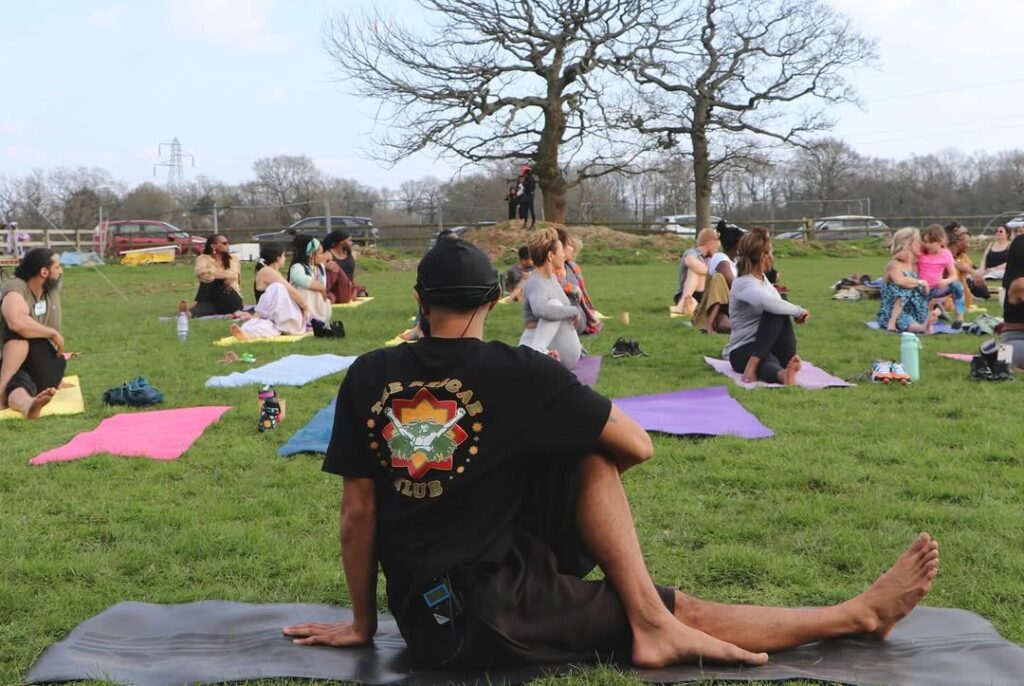
Photo via Groundation UK
Yeah, I think it’s the centering in the four dimensions. I think it’s the simplicity of it which makes it so, so powerful. It’s something that I do daily as part of my rituals and also within the movement work. Whether I’m lecturing at university or in a community space, I’ll start with centering and inviting people into their bodies. I love it because, as I said, it’s so simple and it’s so rare that, especially as minoritised people, we are invited into our bodies in a safe way.
I think that’s why it’s just been so powerful in the work that I’ve been doing, because it’s just so simple and accessible. It’s not that you got to be able to do a certain breathing technique, or be able to get your foot around the back of your head and pull the maddest yoga pose. It’s just coming into yourself.
For me, it’s what they call the daily bread. If I’ve not done some form of practice in the day, like, I definitely feel it throughout the day. It sets a precedent for how the day is and how it’s felt and experienced. Recently, I’ve been learning Kemetic yoga as well, yoga from Ancient Egypt, and a lot of the practices are very similar to what we do with politicised somatics too. For me, that’s been really interesting, because it just speaks to how some of these practices are really quite old and probably within us.
Nishma: What has changed for you since starting to practice embodied leadership? Personally? In your work? More broadly? Is there anything surprising or unexpected that has come out of practicing?
Macole: I guess, on a personal level, just a deeper connection with self, my “hearing” – I’m able to listen to my body a lot better. It’s like our bodies have always been speaking to us, but we’ve not been listening or feeling what bodies are saying.
~
Politicised somatics has just allowed me to feel more balanced in life and more balanced in relationships. It’s also given me a framework in which to do this movement work that I do in the community.
~
It’s sort of like a toolkit. For example, when the race riots happened last year, in Sheffield, there was a whole building that got burnt down. There were a lot of right wing mans on the streets, and a lot of the messages from people in Sheffield was “we need to go out, we need to fight, to be on the front line”. And in a sense, there was some truth in it. We do need to fight back. But, for me, that was only speaking to a certain kind of demographic, because when I was looking inside my community, my community wasn’t necessarily saying that fighting was the right thing at that specific moment. We were actually exhausted and drained. I do a lot of work with young people, youth workers, and if I was to tell all these young Black youths “yo, you need to go fight”, automatically, what’s going to happen is that they’re the ones that are going to get criminalised and be seen as the aggressors. So, at that time, it was actually about coming back into the self or coming back into the community.
~
It was through doing embodied activism, and from doing somatics, that we were able to think about how we respond, and not react, in that moment. Yeah, the reactionary thing is to go out into the streets and start beefing it with them. But, really and truly, what the body needed, what we needed as a community, was actually to come inwards and to find places of safety and find places of joy and nourishment. It was somatics that helped bring that.
~
Nishma: Yeah, I think what you’re also talking about is, in that moment of high tension and high stress, the ability to discern and say “actually, that’s not what we’re gonna do right now because that’s not what our community needs”. That’s really amazing. And, yeah, appreciate you sharing. I only had one other question, which is, where do you see this work going in the context of this land and your communities?
Macole: So my declaration is about uplifting my community, the Black community in Sheffield, through healing. So a lot of the work that we’re doing together in movement medicine helps me do that. I can imagine and vision how to do my work on a broader scale. We’re also thinking about how this work needs to be adapted to apply it to our people and our communities, in a way that sits right, and in a way that acknowledges our own experiences and ancestors. Shaping that will allow this work to speak to so many more people and that’s what I’m most excited about.
About Movement Medicine Talks:
Movement Medicine Talks is a series with Nishma, our Movement Medicine Senior Programme Lead, and members of our Movement Medicine Teaching Training Programme cohort. The Movement Medicine programme works with movement leaders to:
- Explore the embodied skills, relationships and ways of being that support healing justice – building and extending trust, holding contradictions and complexity, visions for the future, holding the short and long term, consent, discernment and boundaries, and more.
- Develop a shared radical vision, analysis, and understanding to navigate our current conditions and politics, and to build together toward our vision.
- Explore and interrupt some of the trauma based reactions within movement culture- shift, from splitting to interdependence, from pulling each other down to building each other up, from criticising risk taking to celebrating experiments, and more.
- Understand how trauma healing serves movement building, sustained relationships and strategic experiments.
- Learn about conflict as generative – discerning our triggers, deepening trust and learning across conflict
More about Macole:
Macole Lannaman is an embodied practitioner, researcher, and community organiser based in Sheffield. His work centres Black embodiment, healing, and resistance, exploring how systemic racism, policing and carceral system are lived and held in the body. Currently completing a PhD on racism in schools and its impact on Black students’ somatic and mental wellbeing, Macole uses embodied, creative, and participatory methods to support collective healing and critical reflection.
He is the co-founder of Groundation UK, a community organisation focused on grassroots healing, political education, and movement-building for the Black community. Through workshops, research, performance, and facilitation, Macole creates spaces that honour African and Caribbean diasporic knowledge, lived experience, and ancestral wisdom, while supporting individuals and communities to reclaim agency, rest, and resilience. His practice is grounded in ‘Ends’ culture (Alex Augustin), political somatics, and decolonial approaches to wellbeing, with a deep commitment to justice, care, and liberation.

Related
Rootwork: Reimagining the Future Starts in the Body
“Taking just a few minutes to land in our bodies changes the quality of how we are together. It creates a different foundation for connection, conversation, and collective imagination, and my hope is that we can all build on those skills and apply them to our daily practices.”
Rootwork: Re-membering for Black Liberation
“We have a felt sense that something’s wrong. Being able to feel it and work through that to get us back to the place of re-imagining: the dream space, connecting with our internal sense of hope and possibility that I feel can only come from the information our body gives us.”
Inside Movement Medicine: Meet Joon-Lynn
Movement Medicine is a multi-year commitment to deepen in embodied practice alongside other organisers, movement workers, cultural workers, and healthcare providers. In this series we explore how it has impacted people individually and its importance in building towards liberated futures. Here, cultural organiser and co-founding director of Migrants in Culture Joon-Lynn speaks with Movement Medicine Senior Programme Lead Nishma Jethwa about her journey so far.
No going back
HJL’s Health Justice Researcher Dr Stephanie Davis writes on the future of collective care, labour and organising in this short fiction piece.
Anchoring Resilience
A workshop sharing frameworks and practices to reduce stress, address trauma and build embodied resilience.
The Violence of Liberal Racism: What Palestine Reveals About British Mental Health Care
Building Brave and Beautiful Movements
Exploring the conditions and contexts that shape how we build and organise within social movements. We are ready.
The Power of Somatics for Collective Transformation
A discussion about the need and potential of somatics in our social justice movements.
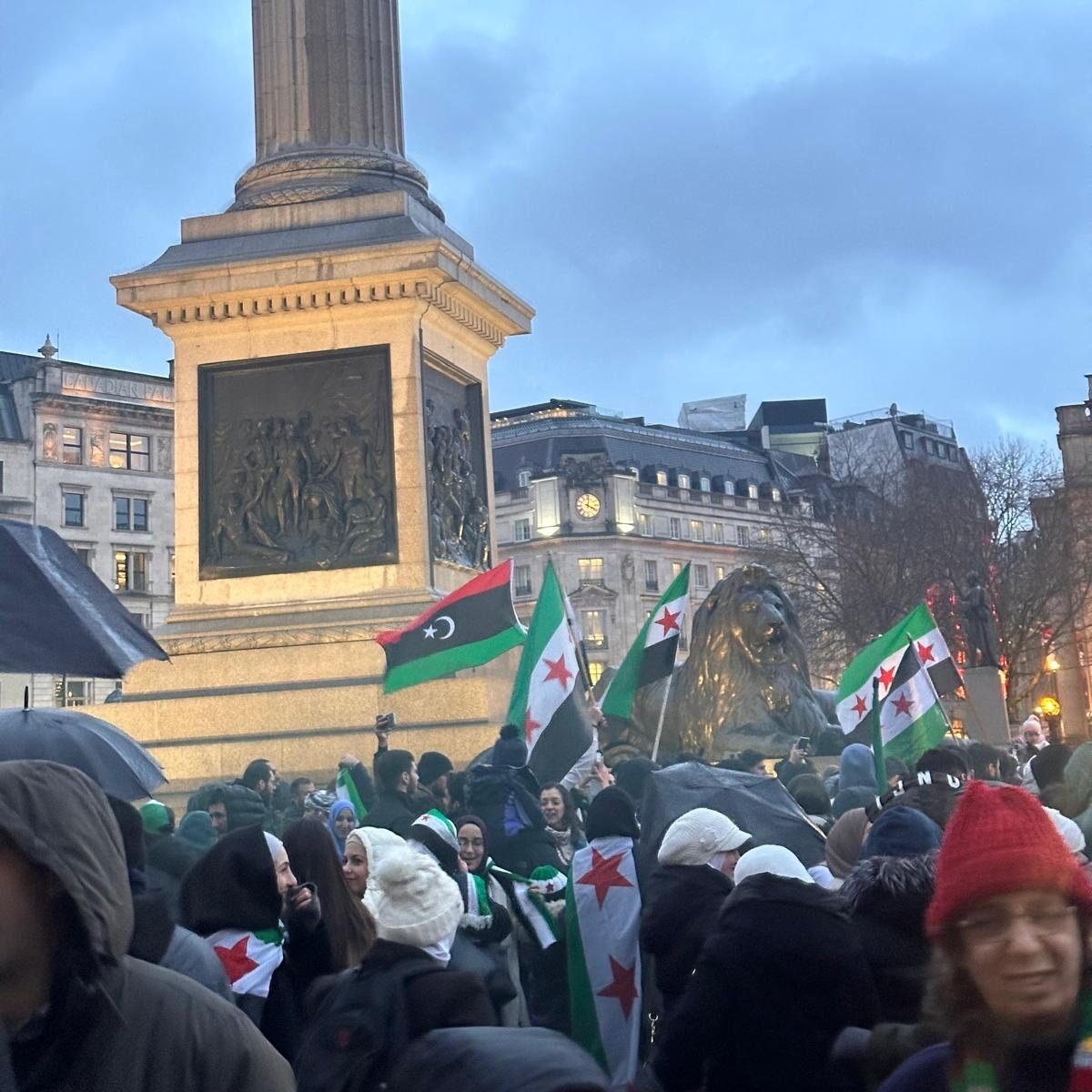
Politicised Somatics in Practice, Liberation, and Contradiction
Movement medicine practitioner-in-training dr dima mekdad explores how somatic practice illuminated and complicated her embodied experience navigating the liberation of Syria.
Somatic Healing: Therapeutic Touch for Healing Trauma
An introduction to healing trauma through somatic practices