Politicised Somatics in Practice, Liberation, and Contradiction
A practice of politicised somatics is central to HJL’s Movement Medicine strategy. In this longread, Movement Medicine practitioner-in-training, dr dima mekdad, explores her lived experience navigating the liberation of Syria after 54 years of brutal dictatorship and nearly 14 years of revolution. She wrote this a month after the regime fell.
This piece is the first in a series exploring and unpacking politicised somatics as a liberatory practice helping us build towards a world with abundant community-led health and healing. We do this work embracing its complexity and contradictions.
I’ve been practising the joy of liberation.
It’s a resilience practice that builds the embodied capacity to experience joy.
While we work for liberation, we rarely pause to sense how it might feel when achieved. For two years, I practised with the belief that in 40-50 years, Palestine would be liberated, Syria would be liberated, and a collective global south liberation would unfold. I have been training my body to fully sense and be present in that future moment, knowing I still had a long time to inhabit this embodiment.
Yet, on the 8th of December at 2:59 am GMT in London, I awaited the fall of the Assad regime—Syria’s liberation.
The first sensation was disbelief. Then joy emerged—a joy of such magnitude that I couldn’t fully contain it. I rejoiced with my brother; we hugged and screamed. It happened: Sakat el nizam (“the regime has fallen”). We shouted it to one another in disbelief, with wide smiles and open arms, embracing to anchor the moment.
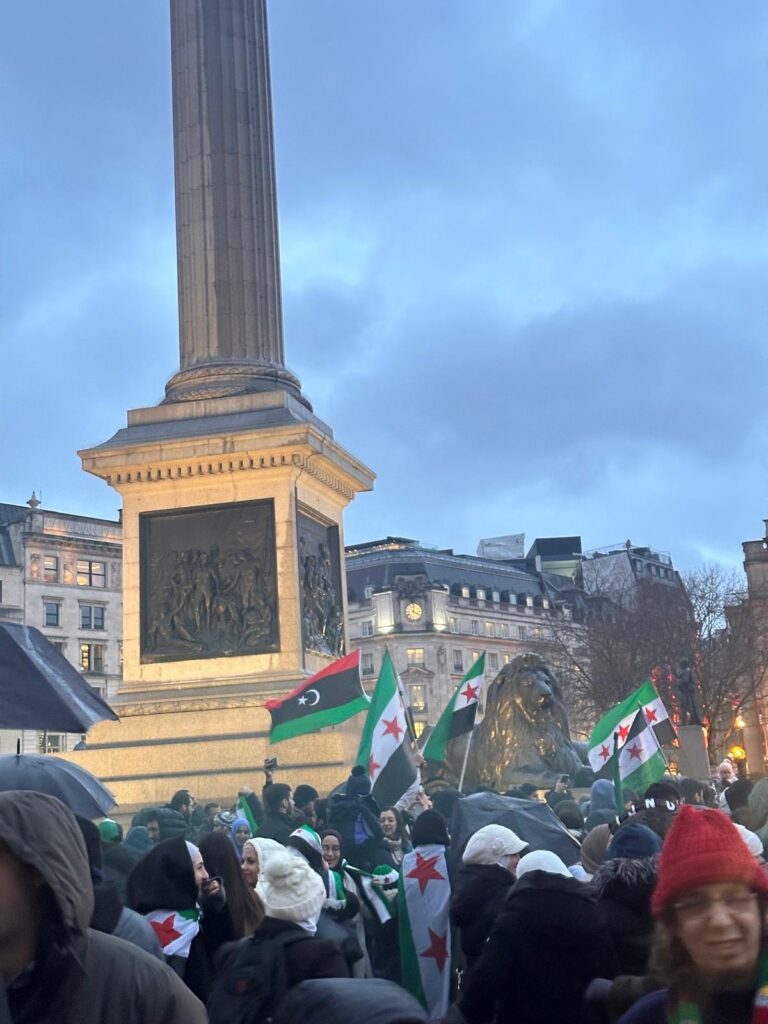
At Trafalgar Square, where hundreds—if not thousands—of Syrians gathered to celebrate, my body taught me two things:
a) I was experiencing a joy I never thought my body capable of feeling, and
b) for the first time in history, the collective Syrian soma experienced true joy together.
Humans are social and relational animals and we organise ourselves accordingly into groups. The phrase ‘collective soma’ refers to a group or collective’s shared embodied experiences, shapes, and memories. We all belong to multiple – intersecting – collective somas.
I witnessed what individual and collective disbelief looked like: the stiff smiles, the empty gazes, and open palms held to the sides. Every Syrian in the square experienced a wave—peaking in joy, dipping into disbelief, and rising again in joy. When those peaks of joy synchronised across the crowd, the very molecules in the air seemed to change.
I was the most present I’ve ever been in my life. My practice came into service, and I held on to that joy in my body for 42 hours before slowly landing.
I observed many of my fellow Syrians—academics, activists, and intellectuals—quickly falling out of joy and into analysis. I watched their bodies curl inward, their gazes lower in worries. Naturally, the decades-old, transgenerational collective shaping of fear, despair and anxiety seeped back in so easily especially when confronted with such a level of uncertainty.
I am not naïve about the challenges ahead, but I knew, in every cell of my body, that this joy was necessary. It was the fuel we would need to sustain us through the struggles to come. That week, to me, was about fully charging our collective batteries—a duty to prepare for the difficult chapter ahead. I held onto the joy simultaneously as I awaited our forcibly disappeared to be released and reunited with their families.
Holding contradictions is a practice by Staci K. Haines that I have always found deeply challenging. This liberation reminded me of its necessity. The practice builds the embodied capacity to hold perceived contradictions as a both-and, not an either-or. In a world that constantly pushes us towards binary absolutes, erasing spectrums and nuances, one realises how liberating oneself from such rigid ways of experiencing the world is profound and demanding work that requires practice.
Syrians learnt long ago that, as my friend, artist and activist Dr George Al Ain eloquently put it, “we are not afforded simple emotions.” We cannot simply experience joy, pain, or loss in isolation. Over the past 14 years, every emotional state has been a complex mixture. As we celebrate our liberation we navigate the profound contradiction that, following the collapse of the brutal regime, Israel occupied additional lands in Syria beyond the Golan Heights.
As the regime fell, Israeli occupation forces (IOF) entered the United Nations-patrolled buffer zone, established by the 1974 ceasefire agreement between Israel and Syria, and seized several areas, including the provincial capital of Quneitra and the remainder of Mount Hermon. The IOF demolished homes, displaced Syrian people, and conducted systematic raids to dismantle Syrian military artillery and weaponry, exploiting the vacuum.
We are never afforded time to inhabit our bodies fully, to process and integrate the deluge of emotions and thoughts. Our dictatorship fell; our land is being occupied. Amidst celebrations, the rebels’ first act was to open the dungeons and prisons, releasing forcibly disappeared Political prisoners who had been illegally detained for years, some for decades. The horrific scenes that followed immediately tinged joy with grief and loss. The imagery of Sednaya’s red prison, the state of the released detainees, and the stories of torture and inhumanity were shattering.
The Syrian Network for Human Rights (SNHR) reported that, as of August 2024, approximately 136,614 individuals were detained or forcibly disappeared in regime detention centres. Following the regime’s collapse, around 24,200 detainees were released, leaving an estimated 112,414 individuals still missing. Additionally, the International Commission on Missing Persons (ICMP) estimates that more than 130,000 people have gone missing during the Syrian crisis, with numbers continuing to rise.
We hold the contradiction that our liberation from the dictatorship and the end of nine years and three months of Russian military occupation came at the hands of Islamist factions. Our revolution, initiated by young men and women in the streets of cities across the country, never called for Islamic rule. While these factions are currently saying all the right things, they leave many Syrians with a deep fear of what lies ahead while maintaining optimism where possible.
I have always believed that migrants and refugees exemplify the ability to hold joy and grief in tandem. Syrians, it seems, have found a way to hold much more. Yet, I often wonder—at what cost to our somas (bodies, psyches, and spirits)? How can our collective soma expand its capacity to hold such immense joy alongside such immense loss and grief, such immense hope yet fear of what’s to come, all at once?
In 2013, my Spanish friend and artist, Juan delGado, once remarked to me, “When I see two Syrians meet for the first time, it’s like watching dogs meeting. They keep sniffing each other until they establish common ground before they can somewhat connect.”
It would have taken me ages to explain to Juan that, for over 40 years, one of the regime’s primary tools of oppression was recruiting informants from within families and neighbourhoods through blackmail, torture, and coercion. Ordinary Syrians became informants against their own, reporting political thoughts, comments, or activities. This often led to people being forcibly disappeared. “Gone behind the sun,” we used to say. For those who returned from the regime’s dungeons, we whispered euphemisms like “they visited their aunt’s home,” never daring to name the horror aloud.
For 54 years, we have collectively and generationally endured a brutal dictatorship that systematically dismantled trust and our sense of collective identity. The regime normalised corruption, wielded fear as its foundation, and embedded suspicion into the fabric of our society. Yet, we found a way to one another with the Syrian uprising starting in 2011 and here we are, in the light of liberation, learning to be together again.
Our education system—a core site of somatic shaping—was weaponised to erase critical thinking from our minds. Many of us were fortunate to cultivate such skills later in life, but the majority of Syrians grew up without the tools to question power. My concern is that most Syrians on the streets, politically unpractised and inexperienced, have internalised decades of oppression.
Adrienne Maree Brown’s words, “We move at the pace of trust,” often come to mind. I believe in those words, yet I am painfully aware of the reality that doesn’t afford us the time for such a pace. This has always been the truth of the global south and of those on the front lines of resisting oppression.
In the light of liberation, half of Syria’s population is displaced. Millions cannot return home because their homes have been destroyed. INGOs and funders, fatigued by years of crisis, are hesitant to support Syria’s uncertain future. Meanwhile, our social justice movement and civic space are called upon to respond to overwhelming needs with dwindling resources.
I think of Nkem Ndefo’s beautiful work on stabilisation as a necessary foundation for healing and transformation. It begins with individuals tending to their bodies, caring for one another, and rebuilding together. Yet, the world will not pause to shower us with resources or time to reflect, heal, and transform. We must simultaneously address our collective wounds, rebuild trust, foster political education, and begin the monumental task of country-building, despite the odds.
Living as a Syrian with Libyan and Palestinian roots in London since 2011 – first as a student, then as a refugee and later as a British citizen – has taught me much about giving and receiving solidarity and allyship. The last 15 months of genocide in Gaza deepened that learning, and the liberation of Syria tested it further.
During the early months of the genocide in Gaza, the term Progressive Except Palestine (PEP) gained mainstream traction. It described individuals or organisations identifying as progressive on various social and political issues but refraining from supporting Palestinian rights or criticising Israeli policies and violence.
Similarly, during the early years of the Syrian revolution – particularly between 2011 and 2016 – many leftists and progressives aligned with the Assad dictatorship, citing its alleged anti-imperialist ideology. Many could not hold their perceived contradiction of being anti-imperialist and anti-Assad. This forced me into countless difficult, and often harmful, conversations with those lacking the embodied experience of what it means to be Syrian, surviving and growing under a totalitarian murderous regime. Once, I even confronted Jeremy Corbyn, then shadow prime minister, about his quiet opinions on Syria for someone as vocal as he is. To his credit, he listened when others didn’t. Some comrades in movement spaces also took the time to educate themselves, aligning with the oppressed rather than the oppressors. But over time, I stopped engaging in such conversations, choosing instead to preserve my breath.
When Russia invaded Ukraine, it reactivated deep trauma in every Syrian heart. We knew that a Russian military presence is never short-term. Russia’s military support of Assad began in September 2015, and when I returned to Syria in 2019 after eight years away, my body vividly recorded the feeling of seeing Russian tanks patrolling my country’s streets. For years, the media in the UK failed to mention the Russian occupation of our country.
Now, as Syria celebrates its liberation, we are again met with the same rhetoric about a “colonial project for a new Middle East.” Many anti-imperialist progressives struggled to understand how Syrians could feel joy over this moment. Some even felt entitled to lecture me with long messages explaining why I shouldn’t celebrate my country’s liberation.
I am grateful for the friends and comrades who approached me with love, care, and curiosity instead of imposing opinions. They brought a humble willingness to listen, holding space for my layered joy with their own embodied capacity to navigate contradictions.
To the PEPs and comrades still questioning whether to be happy for Syrians: perhaps start by watching Prof. Rashid Khalidi’s interview on Hasbara’s podcast. Then, if you know a Syrian, reach out—not with opinions, but with genuine care. Ask how they are, how they feel, and about the safety of their loved ones. Many of us are still waiting for information of those who disappeared into dungeons and were never found, likely to be in one of the many unidentified mass graves that the regime buried its victims in.
Dear PEPs and comrades, attempt leaving your intellectual debates and opinions at the door. Come with true curiosity, a willingness to hold contradictions, care, and love for the collective liberation of all. Humbly ask first before bestowing your unsolicited views upon us. And if you have the capacity and are eager to help, start by asking how you can contribute. Do not devise your own project, fundraise for it, and arrive to implement it without consultation. Ask Syrians inside the country first, and diasporic Syrians second, what we need and how you can truly help. Liberation is a shared struggle, and it begins with embodied listening.
Over the past 14 years, Syrian activists, both within Syria and across the diaspora, have relentlessly pursued justice and accountability for the atrocities committed by the Assad regime, navigating immense political and systemic obstacles. They have spearheaded efforts to establish mechanisms such as the International, Impartial and Independent Mechanism (IIIM) to document crimes and initiated trials under universal jurisdiction in countries including Germany, Sweden, and France. Their advocacy brought Syria’s regime before the International Court of Justice (ICJ), resulting in a ruling demanding an end to torture, though the regime has ignored it. Activists have also been pivotal in founding an institution for missing persons and securing international arrest warrants against Bashar al-Assad for chemical weapons use. Despite the regime’s control over humanitarian aid and Russia’s vetoes restricting cross-border assistance, activists have remained steadfast, finding creative ways to support those in need. Their resilience and commitment have been vital in the fight for justice, accountability, and dignity for the Syrian people.
For more details, see Madaniya’s Briefing at the UN Security Council Session on the situation in the Middle East and Syria here
As a politicised somatics practitioner in training, I am preoccupied with how Syrian social justice movements and civic space leaders must transform from underdog fighters to country builders. While I do not yet have answers, I know these roles demand vastly different shapes and competencies. The embodied skills required to dismantle regimes are not the same as those needed to build a country — to rebuild a country requires us to be creative, connected, and visionary so we do not recreate or build from the trauma we experienced.
For many of us, the defeat of recent years has settled deeply into our bodies. Yet, the events in Aleppo on 27th November 2024 brought a crack of long-lost hope—like a tiny seed buried under concrete, breaking through inch by inch, seeking light and air. I felt it in the root of my spine, under my nails, seeping back into the core of my chest. After 14 years of brutal combat and massacres, we had little space to dream or imagine. Few Syrians dared to envision a new Syria. I, too, had internalised the despair of those living under regime control and practised the joy of liberation only for a distant future, imagining it might come when I was 60 or 70 years old.
Now, as these massive questions confront us, I find my young practice struggling to keep pace with the urgency of transformation. I long to sit with South African activists and to read their testimonies of what felt to them like an unexpected change. I wish for the guidance of movement elders and ancestral knowledge from across the global south, where hard-fought wins have been achieved, to accompany us now.
Some of the core practices we need for this new chapter are: practising joy, expanding embodied capacity to hold contradictions, cultivating somatic awareness of internalised oppressions and trauma, embracing conflict as a generative process, and practising allyship. But how can one shortcut such profound and necessary embodied transformations? Should we embrace a long-term vision and declarations, imagining and organising for 20, 30, or 40 years? Or do we focus on the urgent short term? Is there a dual approach – short-term urgency alongside long-term commitment? How do we organise ourselves for both?
I move forward with these questions – tingling under my skin since the 8th December 2024 – the day Syria’s new dawn arose.
Related
An Introduction to Politicised Somatics
We are portals towards liberation.
So you want to research Palestine?
Researching Palestine as an anti-Zionist academic and mental health practitioner situated in the Global North
Inside Movement Medicine: Meet Macole
“I’m learning how it also starts from the self and how it is at the cellular level in which we create ripples and changes at a more macro scale. Innerstanding that being in the body, as a site of transformation, simultaneous effects broader structures. So much of the time we are understanding oppression by intellectualising it.”
Tai Chi & Qigong Session
A one hour practice to support presence and connection.
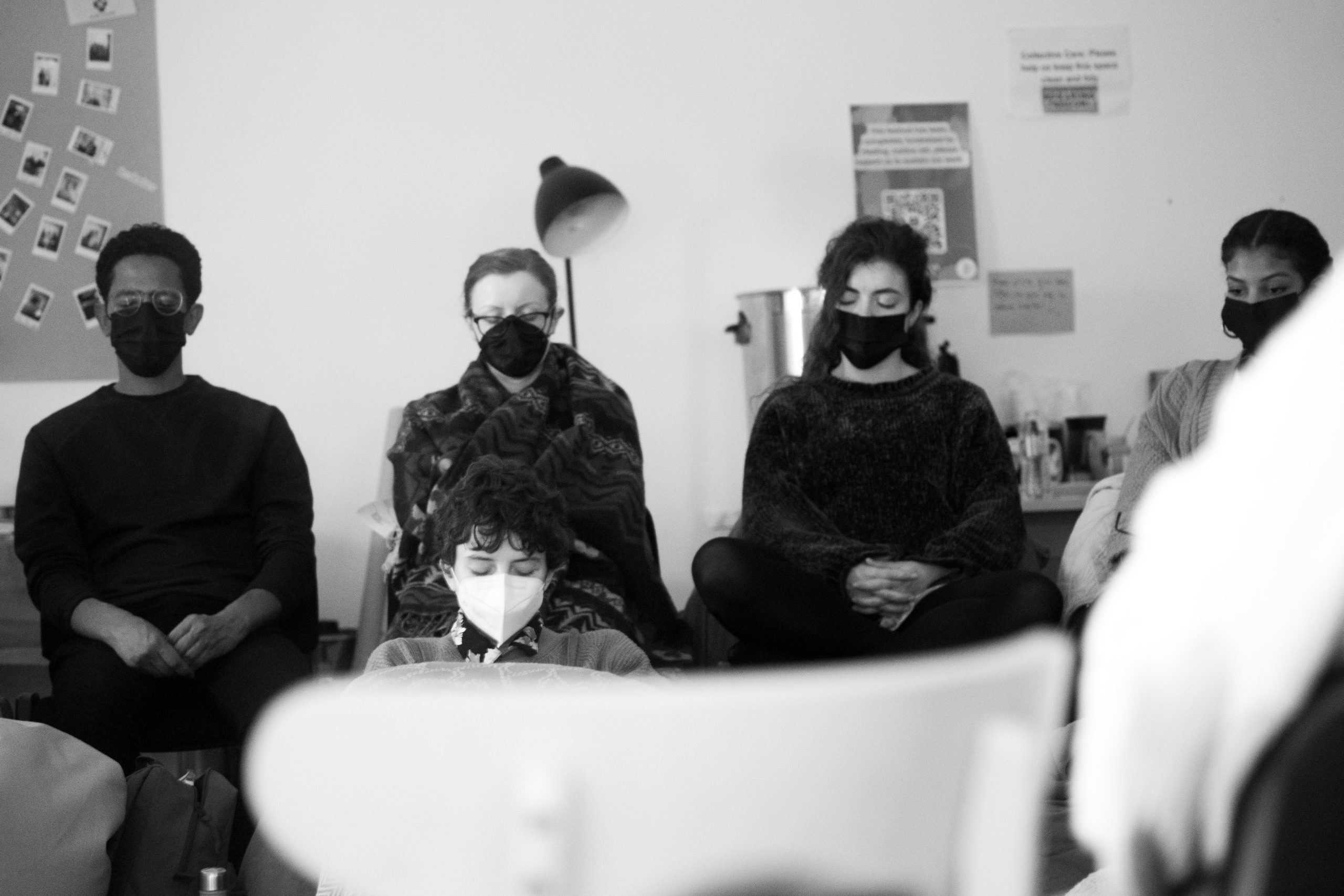
Breath Circle for Collective Capacity
Our Breath Circle for Collective Capacity is a gathering space for grounding. We hold this regular space for light stretching, breathing and meditative practice.
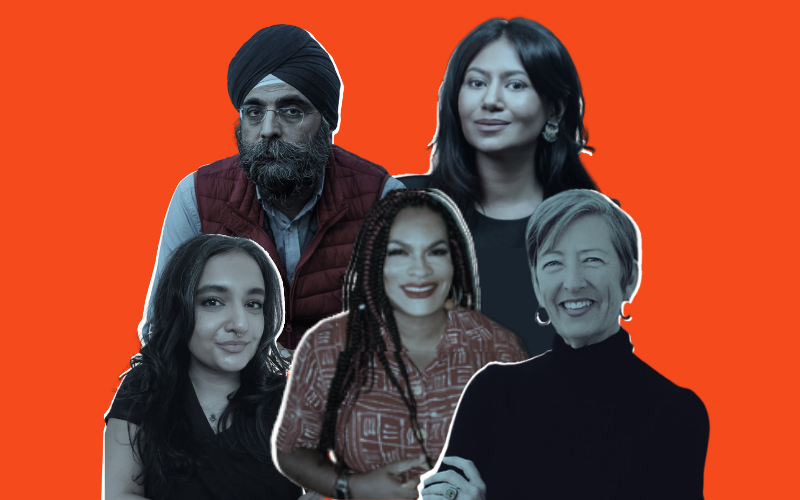
Building Collective Power & Preparing to Govern
Exploring the internal and external work. We offer this space for all of us – organisers, liberation workers, community leaders, healers, and abolitionists – to learn about the embodied competencies we need to cultivate in order to build and tolerate power, and reckon with what it costs us when, instead, we default to shame or making ourselves smaller.
Rootwork: Like The Seeds of a Pomegranate
When it feels like the world is suspended in a state of permacrisis, community is the root that grounds us, giving us stability and hope. Not only does politicised somatics offer us an alternative pathway to reimagine our liberatory futures, but it also demands that we do it together. Like the seeds of a pomegranate, we nestle tightly against one another, connected by the white membrane that threads us together as one.

The Power of Somatics for Racial Justice
A discussion about the need and potential of somatics for racial justice.