Making Space for Embodied Rage in our Healing
Humans are hard-wired to respond emotionally to perceived injustice. This response is anger, and the manifestation of anger is rage. This anger is human and has a function in regulating injustice, but we’ve been taught to intellectualise, contain, or constrain it. The Embodied Rage Space is an antidote to the spaces that tell us our rage is too much. When rage is embodied, it manifests across our soma, or our ‘personhood’, in our thoughts, sensations and responses in our body, in our behaviours, and in our intentions. We are able to access and be with more of our wholeness when we let ourselves feel.
In November 2023 we were working on somatic wellness sessions based in Tai Chi and Qigong practice. In our reflections we noticed how, in the context of local/global fascism and resistance, the stillness and groundedness of Tai Chi practice was difficult to access for some people – especially when racialised/Global Majority folk were experiencing a level of rawness of emotion and rage. Energetically, this manifested as qi that was agitated and flighty, moving up in the body to the chest, head and arms (‘qi’ is a concept from Daoism and internal martial arts that roughly equates to energy). It was an insistent state of unsettledness that demanded attention. It was the body asking for help.
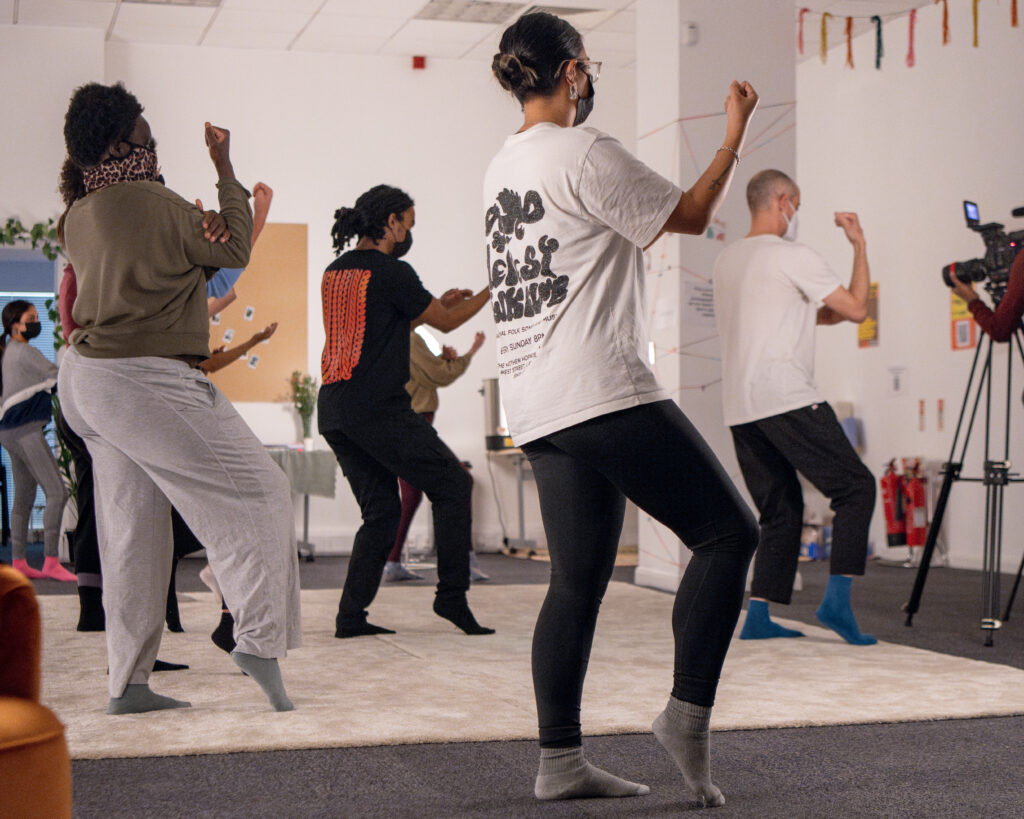
We realized that there were very few spaces available where folks could go, with the exception of expensive retreats, in order to address and work with their anger and rage. Jalal was personally also struggling with the disconnect of being in public or work spaces, where an expression of my rage and disgust with the actions of genocidal governments and public institutions would have resulted in sanction. This splintering of the self into a ‘work appropriate’ or ‘respectable’ persona, which masked authentic feelings, felt like an additional layer of violence that wetiko* imposes upon us. We use the term ‘wetiko’ as shorthand for the mind virus which drives the ‘power over’ cultures and systems of relations, such as capitalism, patriarchy, imperialism, racism, ableism.
For marginalized communities to mobilize and make meaningful change, we must be able to metabolize the harms inflicted by oppressive structures so that we have the capacity to imagine and create. Alex and Jalal decided to use our backgrounds in martial arts to create a programme that could act as a container for these feelings of rage, which for so many people was demanding a constant expenditure of energy to suppress and mask. We recognised that chronic masking and suppression of this nature could and does create deep injury.
Our approach is somatic, in that we attend to the wholeness of the person, rather than separating mind and body. Practice participants use reflective exercises in combination with physical movement and intentional breath to connect with the rage at the level of its physical manifestation, as well as its subliminal presence. We note the emergence of themes, like shame around feeling rage, conditioned tendencies such as suppression and denial of anger, and the sadness and disembodiedness that results. We connect these internal dynamics to the gaslighting, policing and dehumanisation of the external conditions that we move in: coloniality, imperialism, white supremacy and patriarchy. Our conversations as practice partners open up new ways to converse with the inner parts of ourselves that had been pushed down or overlooked. And this is why embodied, or somatic, practices such as this are so important to any movement that is seeking to tackle oppression: the internal and the external are not separate, they are intertwined. Until we unpick our internalised oppression, and begin to understand the connection between healing and how we have experienced the world, the imprints that oppression has made on our soul and spirit will project out into our work.
- We have borrowed from Alicia Garza in using the term ‘metabolize’ in this way.
- We have borrowed a definition of ‘wetiko’ from this article by Alnoor Ladha and Martin Kirk: “Wetiko is an Algonquin word for a cannibalistic spirit that is driven by greed, excess, and selfish consumption (in Ojibwa it is windigo, wintiko in Powhatan). It deludes its host into believing that cannibalizing the life-force of others (others in the broad sense, including animals and other forms of Gaian life) is a logical and morally upright way to live.”
Related
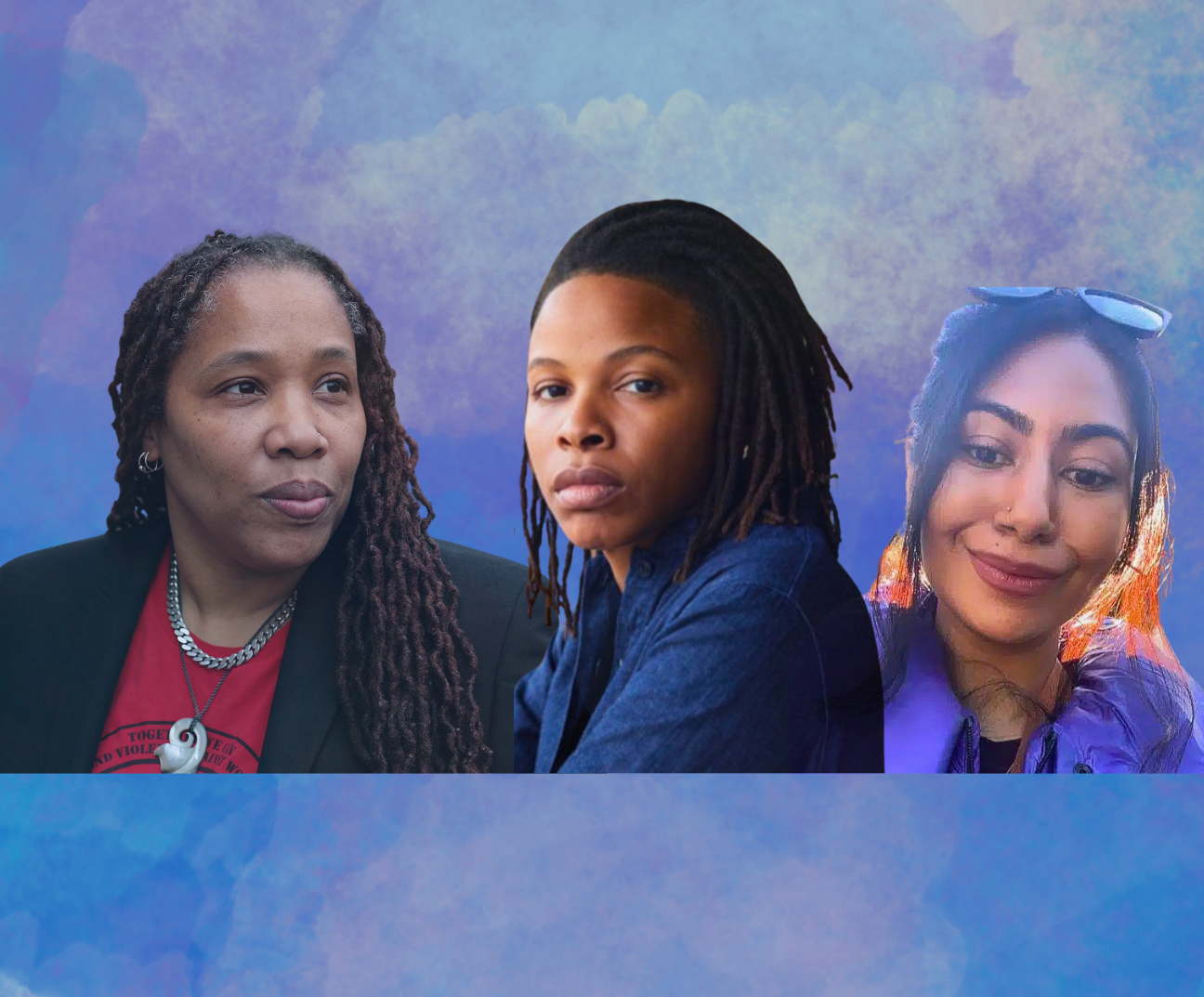
What It Takes To Heal
In the context of ongoing trauma and upheaval, how do we support connection, survival & embrace the medicine within us?
What It Takes To Heal is an exploratory conversation with Prentis Hemphill, Marai Larasi & Farzana Khan to reconnect us to the power of embodiment for collective transformation.
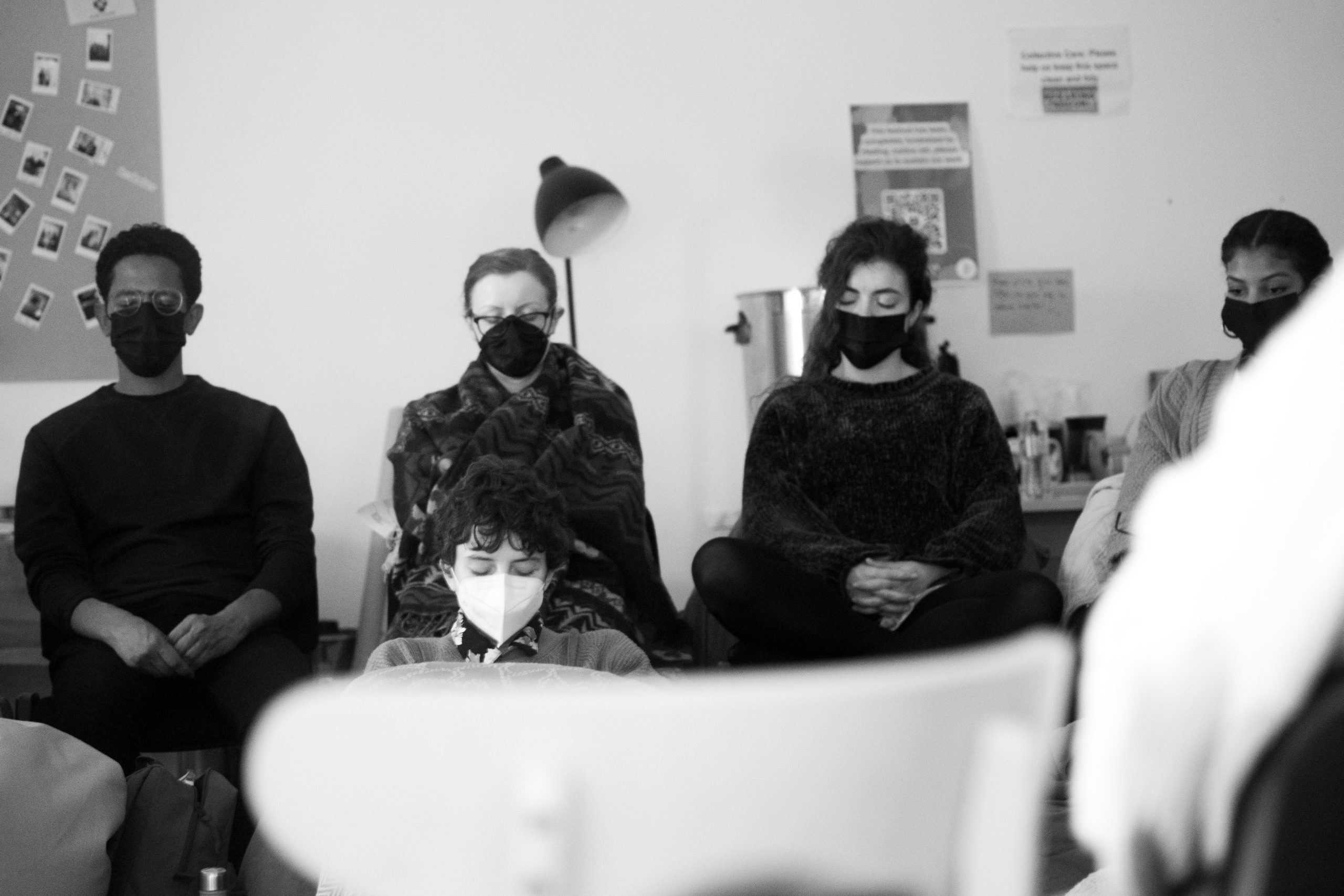
Breath Circle for Collective Capacity
Our Breath Circle for Collective Capacity is a gathering space for grounding. We hold this regular space for light stretching, breathing and meditative practice.
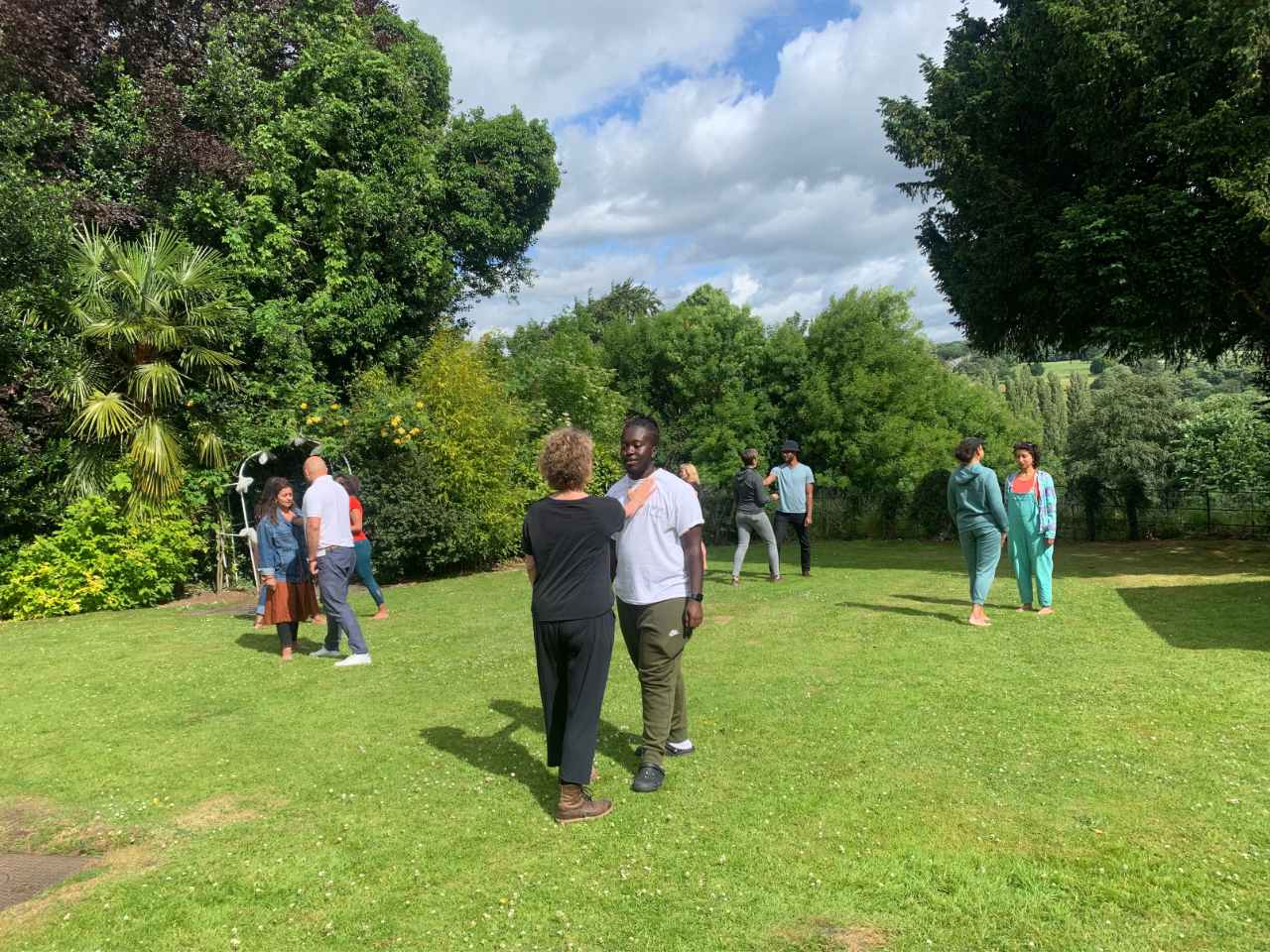
Movement Medicine
Developing a cohort of somatic practitioners embedded in social movements to support personal and structural transformation.
An Introduction to Politicised Somatics
We are portals towards liberation.

Understanding Welfare State Violence
Calling some people a ‘burden’ provides a cover story for welfare state violence.
Rootwork: Like The Seeds of a Pomegranate
When it feels like the world is suspended in a state of permacrisis, community is the root that grounds us, giving us stability and hope. Not only does politicised somatics offer us an alternative pathway to reimagine our liberatory futures, but it also demands that we do it together. Like the seeds of a pomegranate, we nestle tightly against one another, connected by the white membrane that threads us together as one.
Rootwork: Re-membering for Black Liberation
“We have a felt sense that something’s wrong. Being able to feel it and work through that to get us back to the place of re-imagining: the dream space, connecting with our internal sense of hope and possibility that I feel can only come from the information our body gives us.”