In Practice
WHITE WALLS
As marginalised people, the horror genre offers us permission to tremble, scream or show alarm in the context of a world that seeks to suppress our expression. It allows us to explore stories, mythologies, archetypes and speculative worlds of marginalised people through radical imagination.
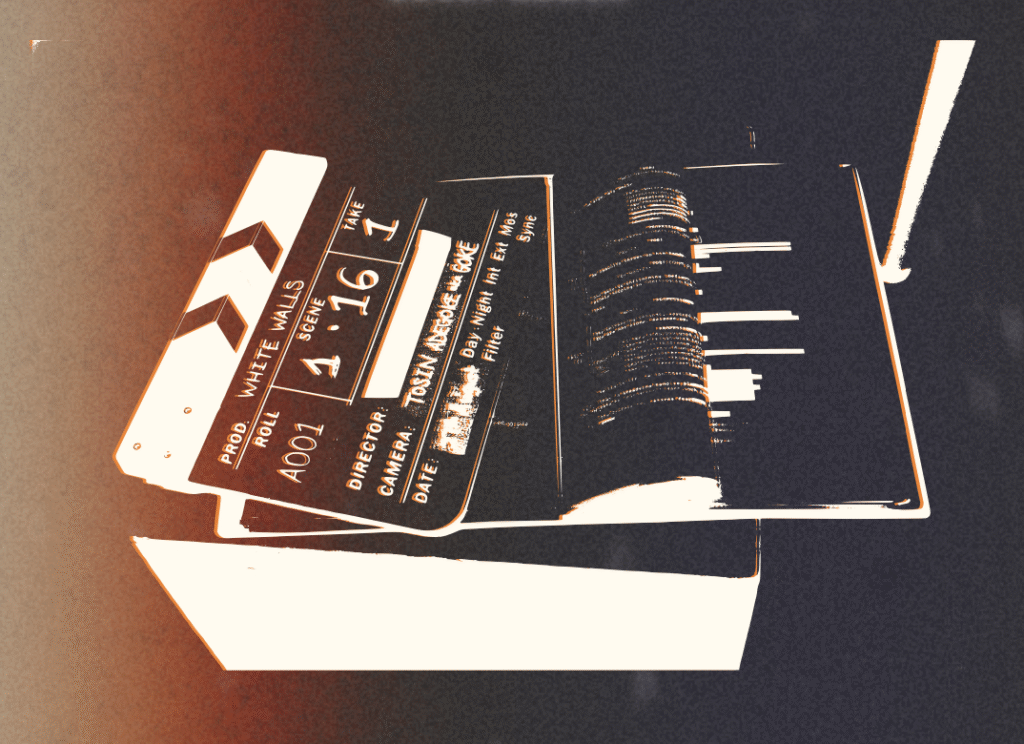
WHITE WALLS is the latest project (May – Oct 2025) as part of Healing Justice Ldn’s creative experimental container IN PRACTICE. This experimental fiction, horror-genre short film explores the lived experiences of neurodivergent, mentally ill, disabled, and mad people within the mental health industrial complex. It was created in collaboration with predominantly neurodivergent Black & Brown writers, cast and crew. Stewarded by Aiyana Goodfellow.
Artistic Responses
Creativity’s role in revolution is often to pose questions rather than arrive at answers. To continue to exploration, we invited artists to bring their own interpretations of the film, some utilising a somatic or body-based practice and others exploring through animation and visual art.
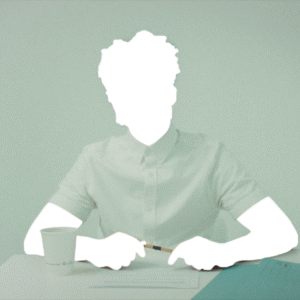
In a world where institutions and systems oppress and atomise us, we can be held and healed in community. This workshop challenged the traditional idea that the film is a “full stop” and that we as an audience are passive participants. Instead, in a simple gesture of mutual witnessing, this poetry workshop extended the collaborative process of the film.
The resulting poems: “Chaos” and “Loom”, go beyond what any one individual can create in isolation. They are a celebration of what we can do when we come together to think, create and feel out loud; embracing the imperfection of improvisation, the messiness of community and what it means to love and care, even through the pain. by Zish
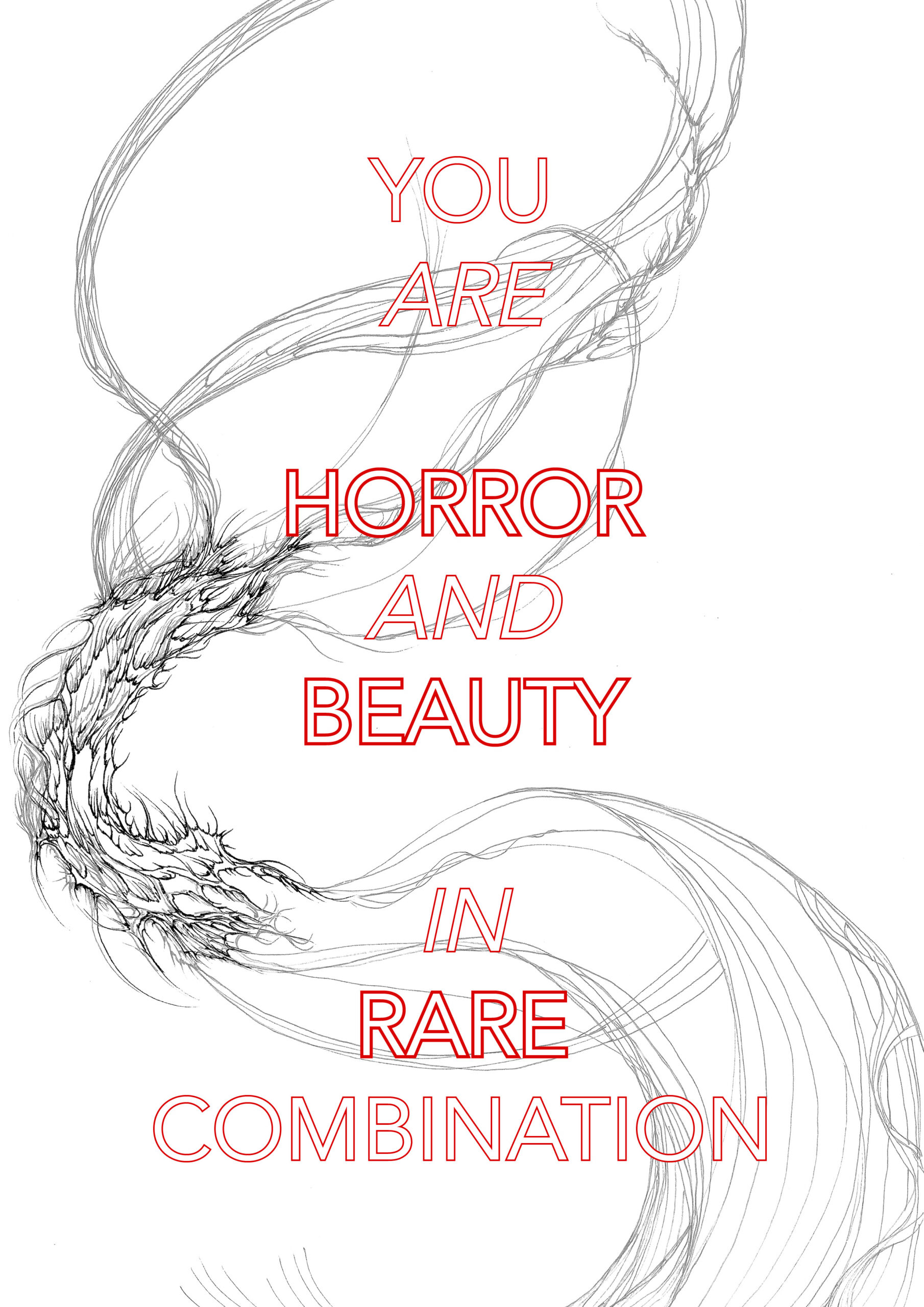
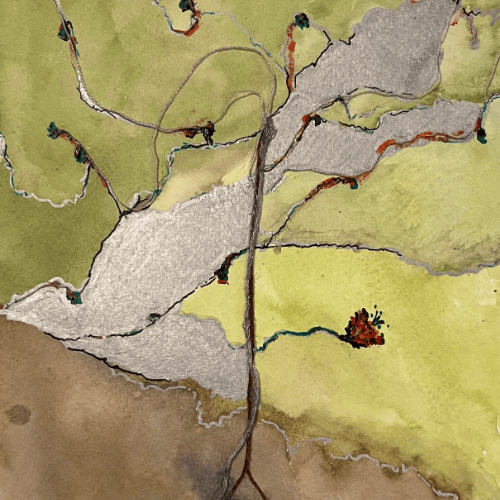
‘You Are Horror And Beauty In Rare Combination’ depicts the Octavia Butler quote featured at the start of the film, alongside an illustration of bodily sinews and ligaments, emphasising the visceral aspect of embodiment, and exploring the layers of the body that are less visible. By Sophie Hoyle

Living in a Box is an animated short film that explores abstraction of the self through shapes, textures, movement and sound. This piece hopes to contemplate and give form to the unseen world of the overwhelmed/oppressed and to sit with the discomfort of internal reflection. By Hita Asodia
Hita Adia Bi:
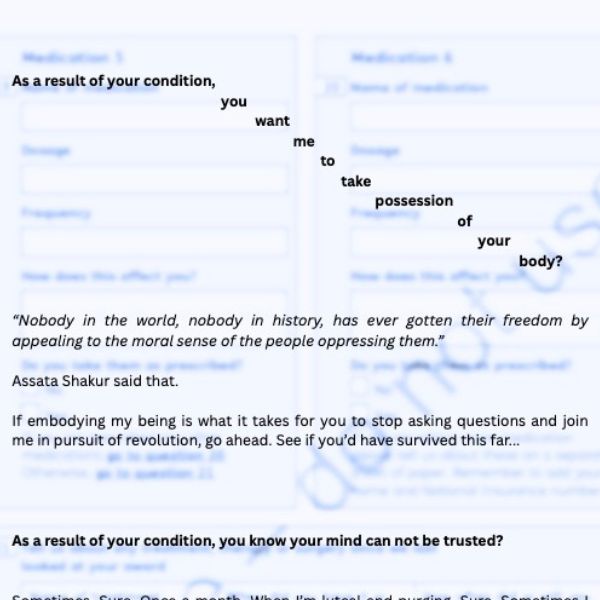
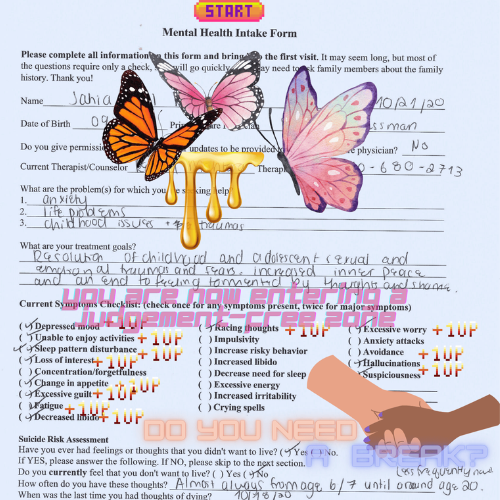
‘Institutionalised Poetry’ is a series of pieces that respond to the questions asked of the protagonist in WHITE WALLS. Distorted example pages from PIP forms foreshadow the pieces, prompting the words to disrupt institutionalised models of so-called “health care”. Incorporating, both digital & hand written text, each response was curated by experimenting with the ways somatic practices create space for the body to answer in ways that bureaucracy can’t – allowing Evie to honour their humanity while tending to a part of their past that still haunts them. By Evie Muir
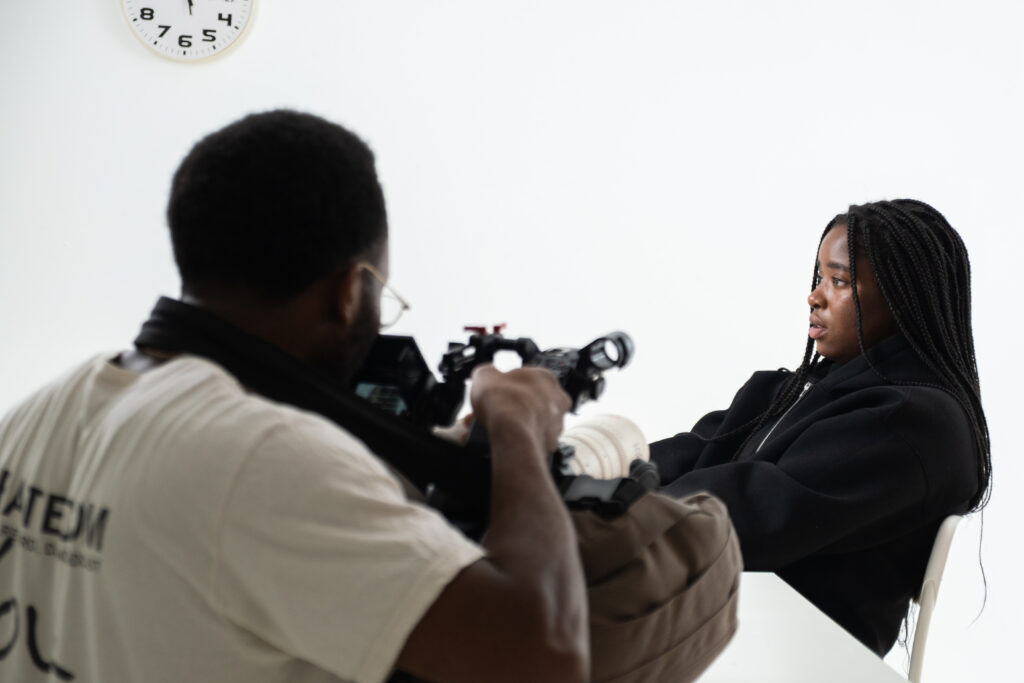
Photo by Amelia Wornell. The cinematography and use of light reflects the horrors of society, which don’t hide in shadows, but stand proudly in plain view.
For disabled people, creativity has been key to exposing and resisting the violence of the system. Artistic labour and creative resistance allow us to highlight the brutal absurdities of the system; offer us the power to shift culture; and can resource us/others in depleting conditions, allowing us to dream of more life-affirming systems within and beyond the State.
Zine
As a space to archive the project, reflect on the process and gather the components together, this zine was designed by Niharika Pore.
2025 Collections
The following collections contain curated creative responses to three key themes that are all interwoven with each other. We encourage you to explore the collections and weave between them, keeping an open mind and a generous heart. Stewarded by Molly Lipson.
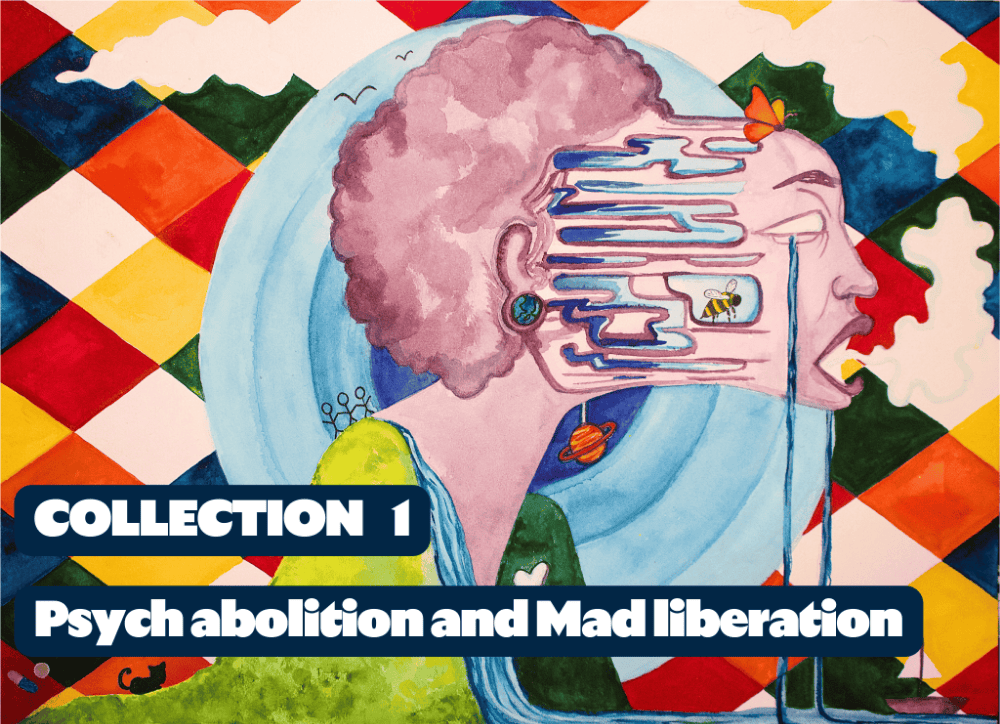
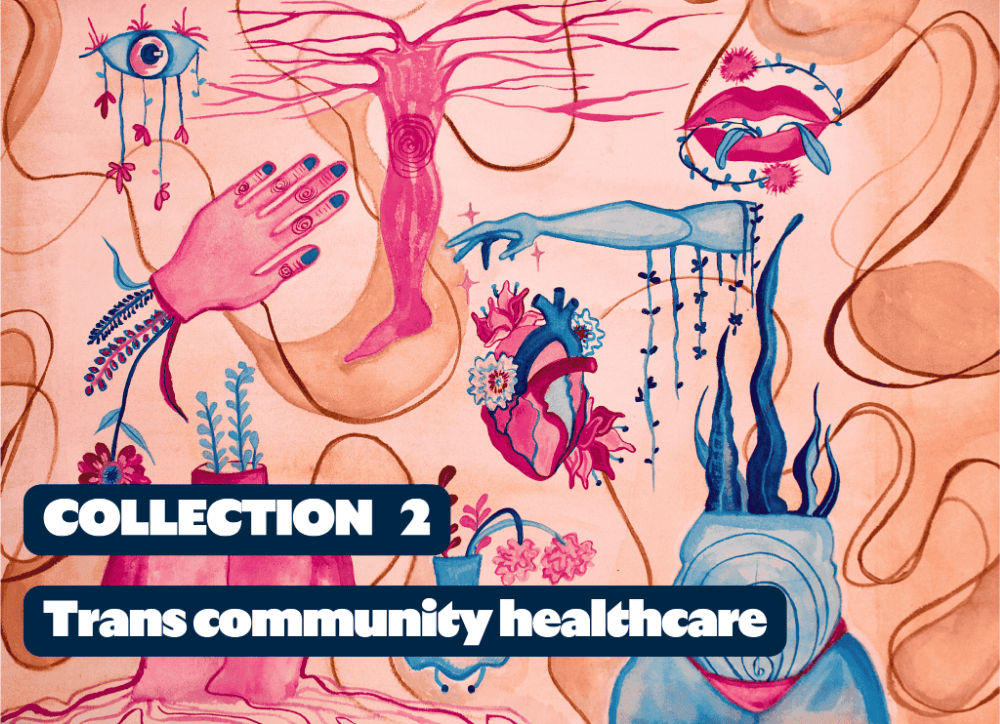
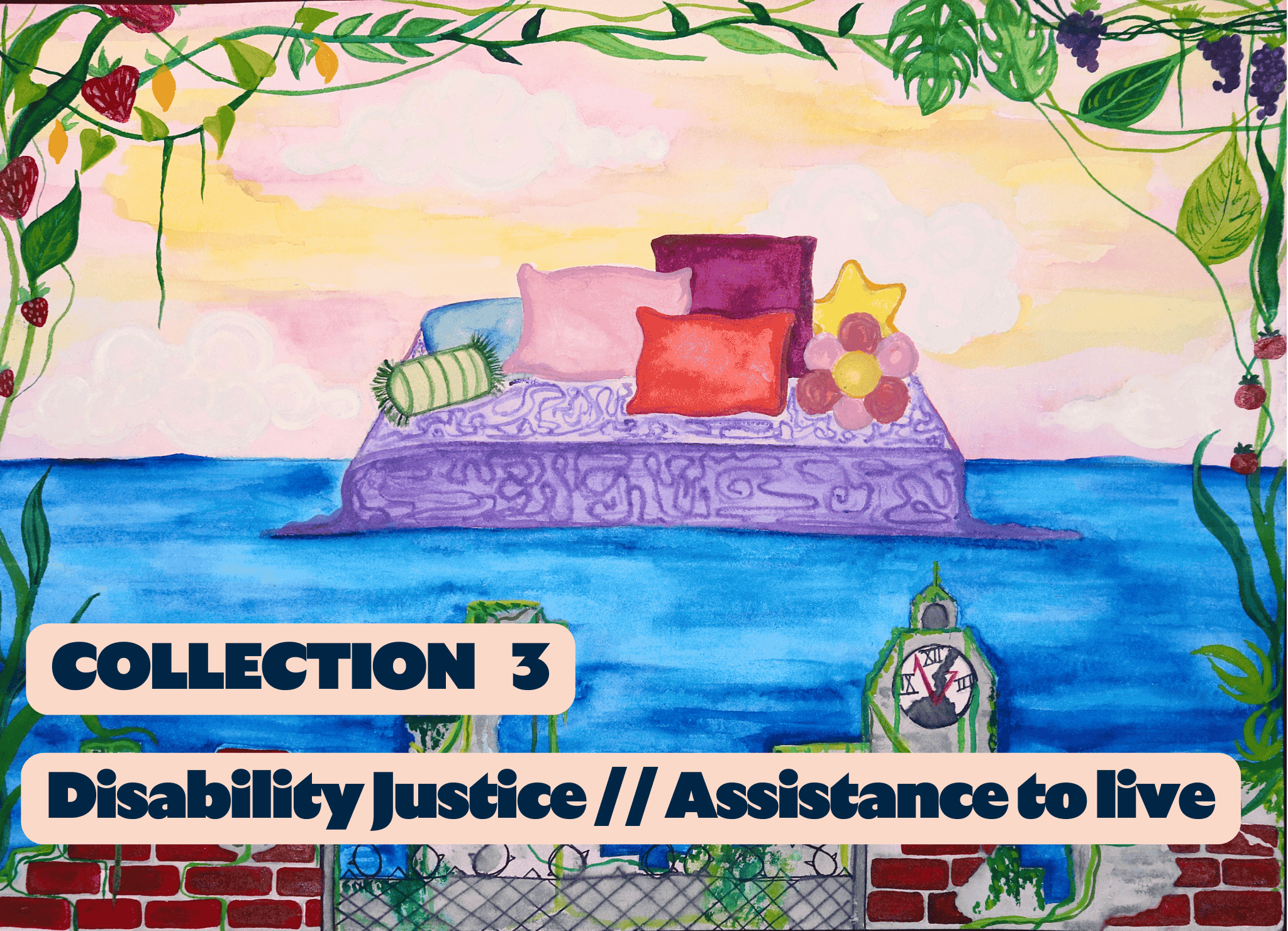
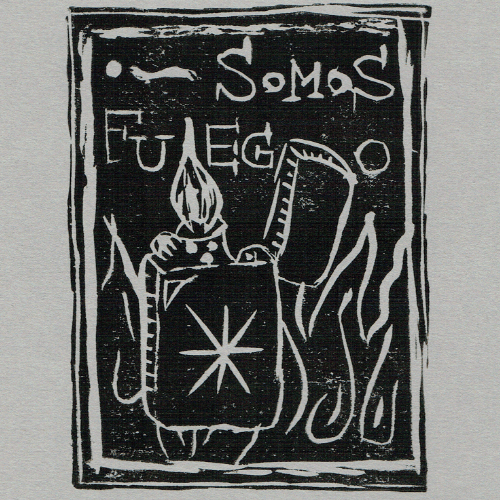
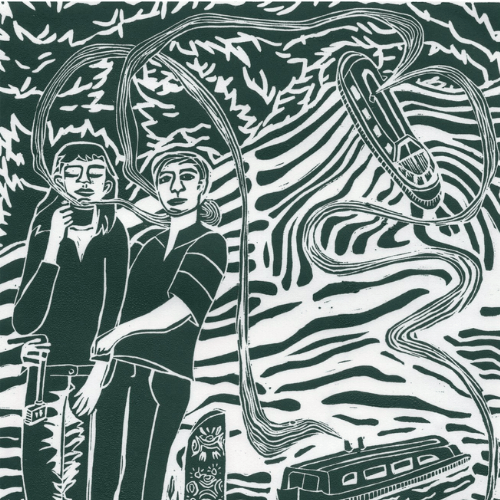
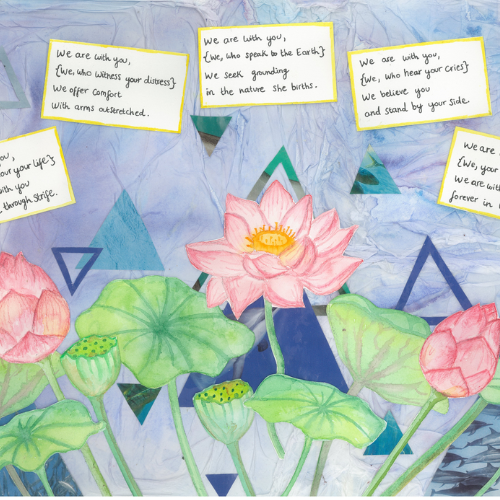
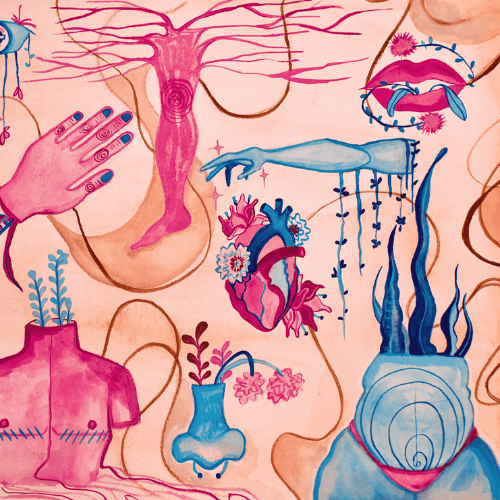
Illustrations by Eje Diedjomahor
Explore the collections
Carceral psychiatry is the way in which psychiatric and mental health institutions rely on punishment and imprisonment of those deemed mentally ill. How do we care for each other in crisis? How do we keep someone safe without calling an ambulance, the police or having them locked up? How do we engage with suicidal ideation? How do we build a world with less mental distress – and in the meantime, how do we advocate for Mad liberation?
With a world intent on strategically trying to eliminate trans people altogether, community healthcare becomes even more important. What does it look and feel like for trans people to re-take control of their bodies? What material conditions support liberated bodies, and how do we create them? How do we build power and knowledge of trans healthcare both in and outside the trans community? How does that build towards collective liberation?

Disability justice refocuses disability from a legal, policy and rights framework to one of intersectional, structural liberation. “Assistance to die should not be easier than assistance to live” – this is part of a statement released by Disability Rights UK. In this collection you’ll find creative explorations of what exactly “assistance to live” means, looks and feels like: What can we change, build, grow and nurture so that our society uplifts disabled lives? What does that world look, feel, sound like? Does it already exist, and if so, where, how?
Other Experiments


What is IN PRACTICE?
IN PRACTICE is a space for us to think out loud and unresolved about the longings, tensions, contradictions, and opportunities within our movements.
Every six months, HJL engages a new Editorial Steward to lead by developing, commissioning, and executing creative projects.