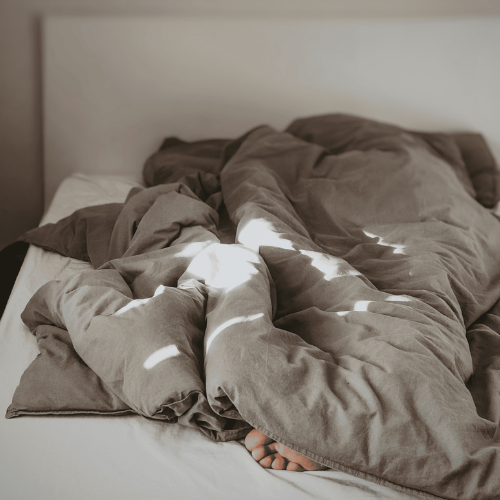
Is pain always political?
“It is crucial that we devise ways of life that are liveable for people with disabilities, but we must also ask how different ways of life inflict debilitation, illness, pain and death onto others.”
An excerpt from Sophie Chauhan‘s book Curious Affinities

By Sophie Chauhan
Commissioned by Micha Frazer-Carroll
It takes four months for the chest pain to properly shift after my third Covid infection. I spend that period having to listen to my body for the first time ever, enraged at what it has to say. In the desperate hours before sleep, after I have woken up unrested, an obstinate weight clings to the inside of my sternum, catching on each breath. A game of strategy starts to take shape. I put each new limit to the test, desperate to build a formula.

Indicators emerge. The triggers and variables shift. Still, nothing is predictable.
Then there is a week where everything gets worse. Come Saturday, I am in the basement bar at work Googling angina-type chest pain and manage to induce the worst panic attack of my life. I don’t remember making it upstairs, but I do remember being furious that no one is calling an ambulance when I am obviously going into cardiac arrest. I want to say three of my relatives are dead from post-Covid heart complications, or perhaps I have never been more afraid of my body, but instead I say nothing because I can’t breathe. By the time I am settled outside with cold water and an audience of indifferent homosexuals, I am mostly reassured that I am not about to die. At various points in the eight-hour A&E visit, tearful GP consultation and subsequent five-hour return to emergency, I am notably less convinced. By Thursday I have confirmation that there is nothing wrong with my heart. The doctor at the hospital points to health anxiety and post-viral fatigue. The GP tells me to take it easy and quit my job. Over the course of that week, I relay a list of symptoms and associations to a dozen medical professionals. Each retelling snaps away at the band around my ribcage. Each recitation summons the feeling. Over the phone or humdrum of hospital noise, I sense each practitioner’s innate kindness and impatience go to battle as I begin to choke on my words.
*
Disabled activists and scholars have done a great deal to reckon with the tension between lamenting suffering and victimising sufferers. It’s like, pain sucks, but so does being reduced to a vessel of pain by people who claim to support you. To offer a gross simplification, the social model of disability and chronic illness works hard to reframe the ‘problem’ of accessibility as one of broken systems rather than broken bodies. This approach implies that if every access barrier were removed, ‘disability’ as a category of experience would be effectively defunct. But what happens to experiences of pain in this worldview? Where do people go to do the real and vital work of grieving lost capacities?
Here is where another question needs to be posed: what role do broken systems play in breaking bodies? Yes, it is crucial that we devise ways of life that are liveable for people with disabilities, but we must also ask how different ways of life inflict debilitation, illness, pain and death onto others. Global systems that combine deprivation and exploitation are central to this concern. They are tools in the uneven distribution of risk; some populations are exposed to concentrated doses of toxicity, injury, precarity and lack to enrich the lives of those few who are sheltered. A cleaner in a hospital inhales carcinogenic products while protecting cancer patients from germs. A farm worker collects pesticides in her womb so that other people’s children can eat avocadoes all year. Debilitation is not a fact of life or figure of chance; it is the bread and butter of racial capitalism. When pain for most people is a direct product of empire, profit, war and injustice, why shouldn’t its sufferers feel like victims?
There are arguments to be made that pain is always political. And yet sometimes it doesn’t mean anything. It enters the room without cause or explanation, without lessons or blame by its side. It is incidental, accidental, erratic, opaque. Pain like this is disorientating because it refuses to point the way. All the rage, grief, frustration, pity, guilt, loneliness and shame that spin in its orbit gain momentum but have nowhere to go. What is to be done with meaningless hurt? Where does it hide when we heal?
*
I want to sit in this difficult terrain because that is where I am writing from. That is to say, I am writing about a hypothetical—something that could have happened to me but has not yet. The cloud of chronic illness hung over my head for the better part of a year, and in the meantime made me very, very frightened. A lot of ugly feelings flowered in the shadow that it cast. For the duration of my acute long Covid (elements of which linger on), the crushing sensation in my chest was compounded by fear and wrapped up in stiff bandages of guilt. In the back of my head was my best friend Sar’s pain, entirely unknowable to me.
No one really knows where Sar’s pain came from or what to do about it; it’s unlikely they ever will. Still, Sar relays the torture of a ten-rated migraine over Facebook Messenger and a 10-hour time difference. She sends snapshots of her nervous system turning against her for days at a time, of her ventures as a medical mystery. I can listen and I can care, but it remains abstract in the truest sense: I am not with her in those sensations or those waiting rooms. It is someone else cooling her neck as she throws her guts up, keeping her sane through delirious nights. Datelines, day jobs, shift work and other minor misalignments bisect our channels of communication. We shoot beats back and forth through cyberspace: sometimes rapid-fire, sometimes largo, always syncopated. When Sar has a migraine, she sends little disclaimers and pictures of her forehead to let me know she is still around, albeit mostly offline. Days will often pass before she reappears, three dots in a speech bubble, to say the pressure in her head has cracked open at last.
These days, when Sar and I talk, it shows that things are sometimes great and sometimes hard, and I guess that’s how it goes for everyone. It turns out that I’m not the only one with hypotheticals. As she speaks, I see the virtual trajectories sail through her head, where things go better or worse than they have gone. There are versions where she is more in pain, more alone, further from the world we used to share. There are also versions where we carry on under all-night strobes and stomp arm in arm around the world. I watch her envision these alternate lives and wonder how they feel to play out over and again. In particular, I wonder what the distance forged by pain must look like from the inside; whether my painlessness makes me seem further from her than her pain makes her seem from me. By the sound of things, she is better at making peace with all of this than I am. In many ways, she has to be.
The version we don’t talk about is the one where it happens to me instead. I think it makes sense that we don’t—there is something grotesque about throwing in your place or if I were you around in the face of something as immune to empathy as chronic pain. We don’t talk about this version because it is mostly unthinkable. Her suffering is foreign, for now.
*
One side effect of mapping someone else’s potential bad trajectories is that you forget about the raw material of day-to-day life from which every alternative is built. When I am deep in crisis thinking, this is what escapes my notice. My ideas about Sar, about my own unreliable body, get carried away by hypotheticals, every what if tugging my attention further away from each of our realities. Meanwhile, her days play out next to mine from the other side of the world. No number of imagined pathways can gauge the temperature of her nerves set alight; nor can they anticipate how ridiculous the dog will look in his new coat, or how much comedy we will find in a minor piece of gossip. Nor can they say what the next infection is going to do to me. These are details that only the real world can gift us. I think this is because the ordinary—even when it is a crisis ordinary—makes up the essence of what we share, and turning to the ordinary pulls us away from figments, from the terror and consolation they instil. When I step outside the lens of projection, when I look crisis/ordinariness in the eye, I care less how bad things will be because I see how bad they already are. It is hard and it hurts, and yet it always proves richer, more of an opening, than anything I could imagine on my own. And it’s the only way I get to see the other side, too: the dynamite, the spectacle, the feats, the lapses, the impossibility and the inevitability of coping.
–
Sophie Chauhan is a London-based writer and researcher, born in the UK and raised in Naarm (Melbourne). She is completing a PhD in Race, Ethnicity and Postcolonial Studies at University College London. Curious Affinities is available to buy now from Hajar Press.
Related
How do you feel?
A poem by Jolien Van Goethem
Merg
A short story by Ker Wallwork
CripPleasurePower
An experimental documentary essay that explores the possibilities of aligning your pleasures with your values
Care Under Capitalism: the work of health and sex
Care Under Capitalism — the work of health and sex by S.N.H.
Second Lives
Musings on a second life by Chloe-Louise Adegoke and illustrations by Isha Joy
Why we need grief in our social movements
The Dagara people see regular grief tending as necessary for the health of the community. Why don’t we do the same? asks Camille Sapara Baron in this excerpt from their book Tending Grief
Loss of reason
Peter Barham explores white supremacy’s dominating influence on madness.