Community Accountability, Research and Ethics (CARE)
What would research ethics look like if it was accountable to communities and movements? As research is increasingly governed by large grant holders and institutions, and funding is sparse and competitive, this question is becoming urgent.
When people say ‘research ethics,’ they tend to refer to bureaucracy and institutions. This may involve, for example, university approvals and institutional review boards. As a team, we have all at some point in our lives worked at universities; we know a lot about how Universities practise ‘ethics’. This includes everything between the bureaucratic tick-boxing that protects the University for insurance purposes, to the communities university research approaches often extract from.
This creates the conditions in which research is defined by the narrow structures of the University, which limits the parameters of what can be defined as ‘knowledge’, restricting our imaginations, and evaluating research through reductionist, neoliberal metrics which undermine the radical potentialities of our work. This centres institutions in defining what is ethical, what constitutes risk, and what is legitimate knowledge – extractively devaluing and objectifying knowledges outside of and in the margins of the University.
As we build and nurture our research at Healing Justice Ldn, we are committed to practising ethical research differently. To do this, we need to prototype and build research infrastructure (practices, approaches, processes, systems), in community with others, so we can practise research that is accountable to communities and movements.
Why an ethics group speaks to this need/process
We knew we needed to think collectively, with people who already do research anchored in community and movements. To do this, we have created a community of practice focused on building capacity–within HJL and within our ecosystems–to imagine and rehearse collective research practice that practises accountability with and to communities and movements.
So we set up the Community Accountability, Research and Ethics (CARE) group.
The CARE group is our way to rehearse ethical research as a collective practice. To think, feel and share together what ethics and accountability actually require in research that seeks to be in service to our communities, movements and broader liberation. It’s a place for us to grapple with what ethical commitments mean for critical organisations and projects — beyond formalised ethics processes — and to ask how ideas of care, responsibility, and accountability can be enacted in practice.
By bringing together multiple voices and experiences to develop collective sense-making, relationality and our entanglement stay integral to accountability. We are intentionally process-led – accountability and reflexive practice are what we do together as a group (how we are with each other) as well as what we create together (the outputs).
Our longer-term aim is to co-design and prototype a community-informed ethics accountability process. We want to do this as part of building infrastructure of accountability for research, to co-design processes of consent and community participation that will ensure alignment between our values at Healing Justice Ldn, project aims, methods, and how these interact with communities and movements. These processes will also make space to reflect on how research can centre and deepen dignity, safety and belonging.
Introducing the group
The group is made up of:
- Remi Joseph-Salisbury
- Tehseen Noorani and Rachel Jane Liebert – both part of Lentil Lab
- Sadia Habib
- Jasber (Jaz) Singh
- Stephanie Davis
- China Mills
- Tarek Younis
What we’ve done so far and where we’d like to go next
Over our first six months together, we focused on collective sense making reflecting on research, ethics and accountability. We have noticed our tendency towards critique and around the constraints of ethical research within the neoliberal university and the extractive violence and coloniality of research.
And yet we feel under-resourced in imagining alternatives – even as a group of researchers from the borderlands and who have been already thinking differently and critically about research. We have made a shared commitment to make space for imagination. This is a muscle that we need to strengthen, to grow our capacities to imagine and practise ethics and accountability in ways not beholden to violent institutions.
This process has led us to question research itself – what is research, what/who is it for, and what/who does it need to be accountable to in our current moment of intensifying polycrisis. We have begun to think about reimagining research as:
solidarity,
care,
healing,
community,
relational,
worlding,
resistance
shared risk
mutual aid
And how thinking through research in these ways may unfurl into more liberatory paths of what research could be for communities and movements.
Throughout 2026, we’ll be sharing experiments in our thinking and practice. These are as entry points for anyone interested in learning alongside us on this journey.
Let us introduce you to our group:
Bios
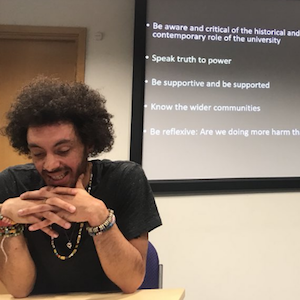
Remi Joseph-Salisbury
I’m a community organiser and an academic in the antiracist tradition. I’m a Reader in Sociology at the University of Manchester and a Steering Group member of the Northern Police Monitoring Project. I’m also an advisory board member for the youth group Kids of Colour and an academic associate of the Stuart Hall Foundation.
My work focuses on racism and antiracism in the contexts of schooling and policing, and I’m currently researching policing in schools in England. I also co-authored a book on ‘anti-racist scholar-activism’ which has some resonances with the focus of the CARE project.
In terms of why I’ve joined the group, I’ve followed Healing Justice’s work for some time, and was eager to join this project because it creates space for the kinds of conversations about ethics and accountability in research that are often stifled within university settings. My involvement in community campaigns has made clear to me how urgently we need to rethink research practices and relationships — and this feels like a meaningful space to do that together.
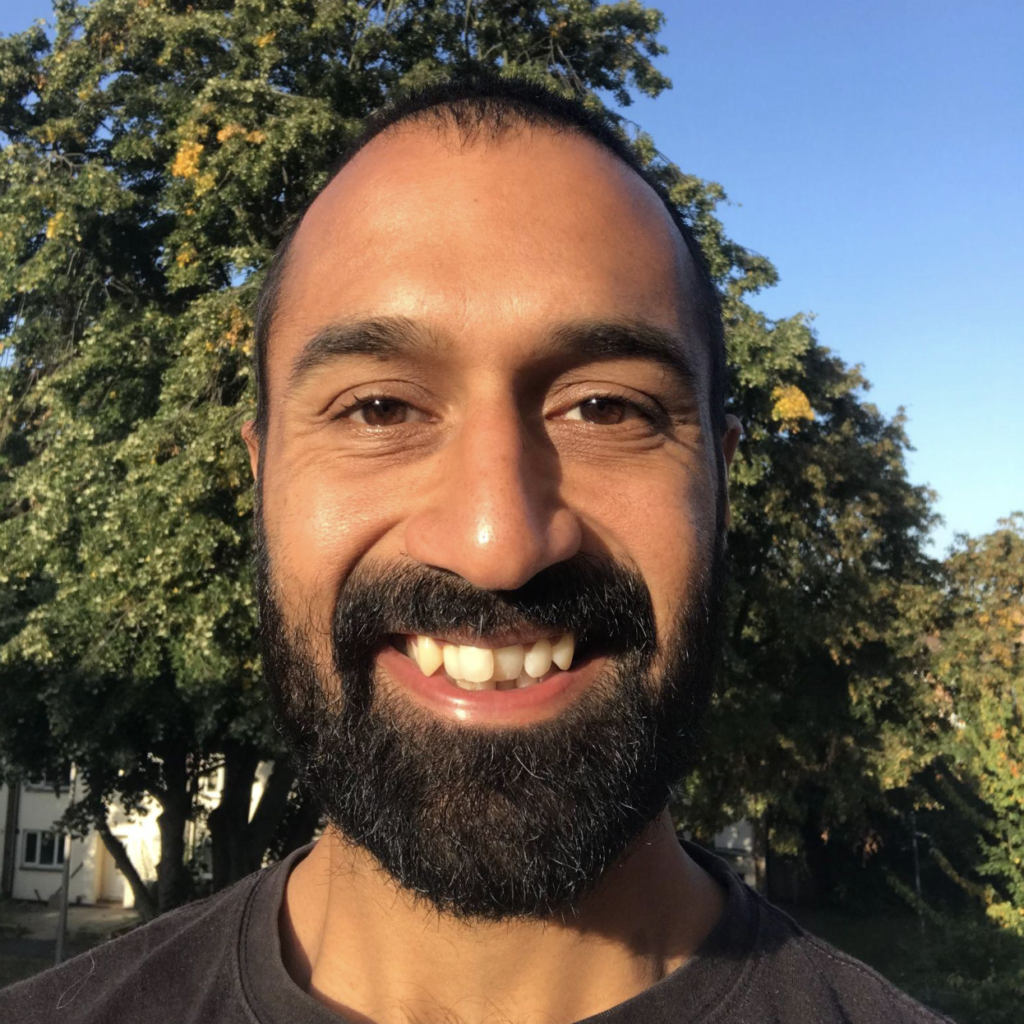
Tehseen Noorani
I’m a critical social scientist interested in non-ordinary/extraordinary/transformative experiences, particularly those produced through use of psychedelics and sacred plant medicines, and those naturally-occurring and often pathologised as ‘psychotic’. I tend to look at these experiences in the context of pharmaceuticalisation, colonial legacies of theft and appropriation, and the war on drugs. I’ve moved around multiple social science and humanities disciplines, and often have one foot inside the university sector while collaborating with knowledge-makers and social movements beyond the walls of the university. This is what has drawn me to being part of this group – imagining and uplifting ways of creating robust knowledge and evidence for the purpose of transformative practice within communities themselves, at a time when community groups are being increasingly commodified by universities following the latest imperatives towards ‘community engagement’ and ‘co-production’.
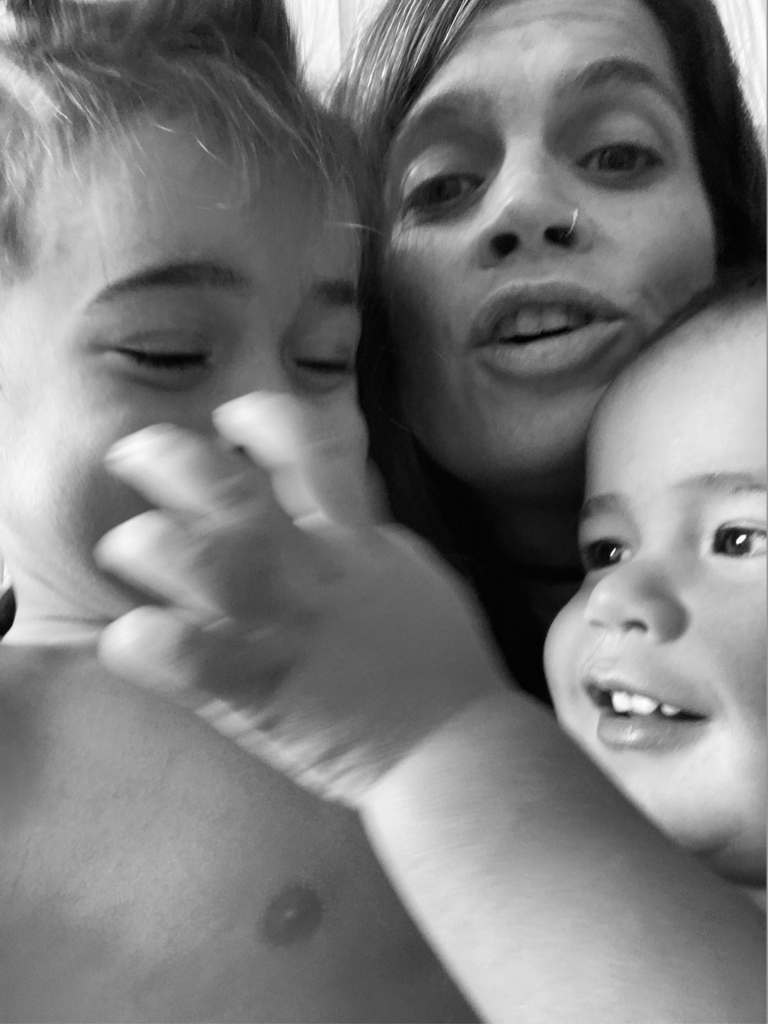
Rachel Jane Liebert
I’m sixth-generation Pākehā (Irish Gaelic, Ulster Scot, English, German) & I guess a kind of psychologist, seeking to breach the genocidal legacies of my settler & intellectual ancestors through counter-colonial experiments with content & form. At present this includes being both a mama & the non-Indigenous lead of The Tīpuna Project – a community-based collab around the decolonial possibilities of communing with ancestors. I have a PhD from the City University of New York and have been a senior academic at the University of East London for several years now, although am privileged to currently be hosted by Te Rōpū Whāriki – a kaupapa Māori research centre in Aotearoa. My praxis has always conspired with activism, art & the more-than-human – including authoring/making, Psycurity: Colonialism, Paranoia and the War on Imagination.
I joined this collective as an extension of these commitments. Like HJL, I believe our movements need to try & enact the world we yearn for through community-based alternatives to state institutions – including research. This feels all the more necessary right now given how fascism can creep through the banal & the bureaucratic. It’s an honour to be imagining & experimenting in this space with such wise & loving folx.

Sadia Habib
I’m a Senior Lecturer in Education at the University of Manchester, and an Associate Curator of Learning at Manchester Museum. From 2019 to 2023, I was the Our Shared Cultural Heritage Coordinator at Manchester Museum, where I mentored young people to lead on critical and creative work around identities and belongings. I am also a researcher in the Centre for Dynamics of Ethnicity at the University of Manchester, and co-founder of The Riz Test.
I was delighted to accept the invitation to join the group to share my experiences of doing research in education, community and cultural spaces. I want to collaborate with HJL staff and supporters in strengthening practices around ethics and accountability in research outside of the university. My work with young people from racialised and classed communities shows that the practice of research ethics and accountability can impact whether or not they wish to take part in research. Young people are quick to point out the colonial, performative and extractive nature of university research, and rightly wish to keep well away. And yet, if we co-produce research with young people, it can be rich, cutting-edge and life-changing.
I am interested, therefore, in (re)imagining new CARE-centred ways of conducting ethical research while remaining accountable to those we engage with/collaborate with/co-produce with. We need to keep reminding ourselves that this requires a sense of solidarity and reciprocity with our communities. Being part of this work with Healing Justice Ldn is a wonderful much-needed opportunity to work with fellow activists, campaigners, community-organisers, youth workers and scholars who are committed to progressing research in ethical and accountable ways.
Jasber Singh
I am a researcher and lecturer at the Centre for Agroecology, Water and Resilience. I have extensive experience designing, delivering, and evaluating participatory action research projects on social and environmental justice at the local, national, and international level. Jasber is interested in the intersections of structural oppression, community organising, and the politics and the sacredness of food, with a focus on the right to food, food sovereignty, and agroecology. My latest research project used creative methods to work with communities to reveal the lived experience of immigration powers, no recourse to public funds, and right to food violations in the UK.
I also bring a background in youth work, community organising, and advocacy, both in the UK and South India, where I have supported communities experiencing racism, casteism, and the hostile environment through grassroots, creative and meaningful interventions.
Research is inherently political, shaped by power relations at every stage, from the questions we investigate, the methods we use, the ways in which the researcher engages with communities, and how knowledge is represented. In other words, research and the researcher are always in relationship with power. How can we work with these power relations for transformation?
I joined this group to engage in critical and productive conversations about the ethics of research and to collectively develop resources and frameworks that centres accountability throughout the research processes. I also joined the group in the spirit of solidarity and hope to actively build and be part of community of practice that embraces politics, power, and praxis so that research is a meaningful tool for transformations.
Dr China Mills, Dr Stephanie Davis, Dr Tarek Younis, Remi Joseph-Salisbury, Sadia Habib, Jasber (Jaz) Singh, Tehseen Noorani (Lentil Lab), Rachel Jane Liebert (Lentil Lab)
25/02/2026
Related
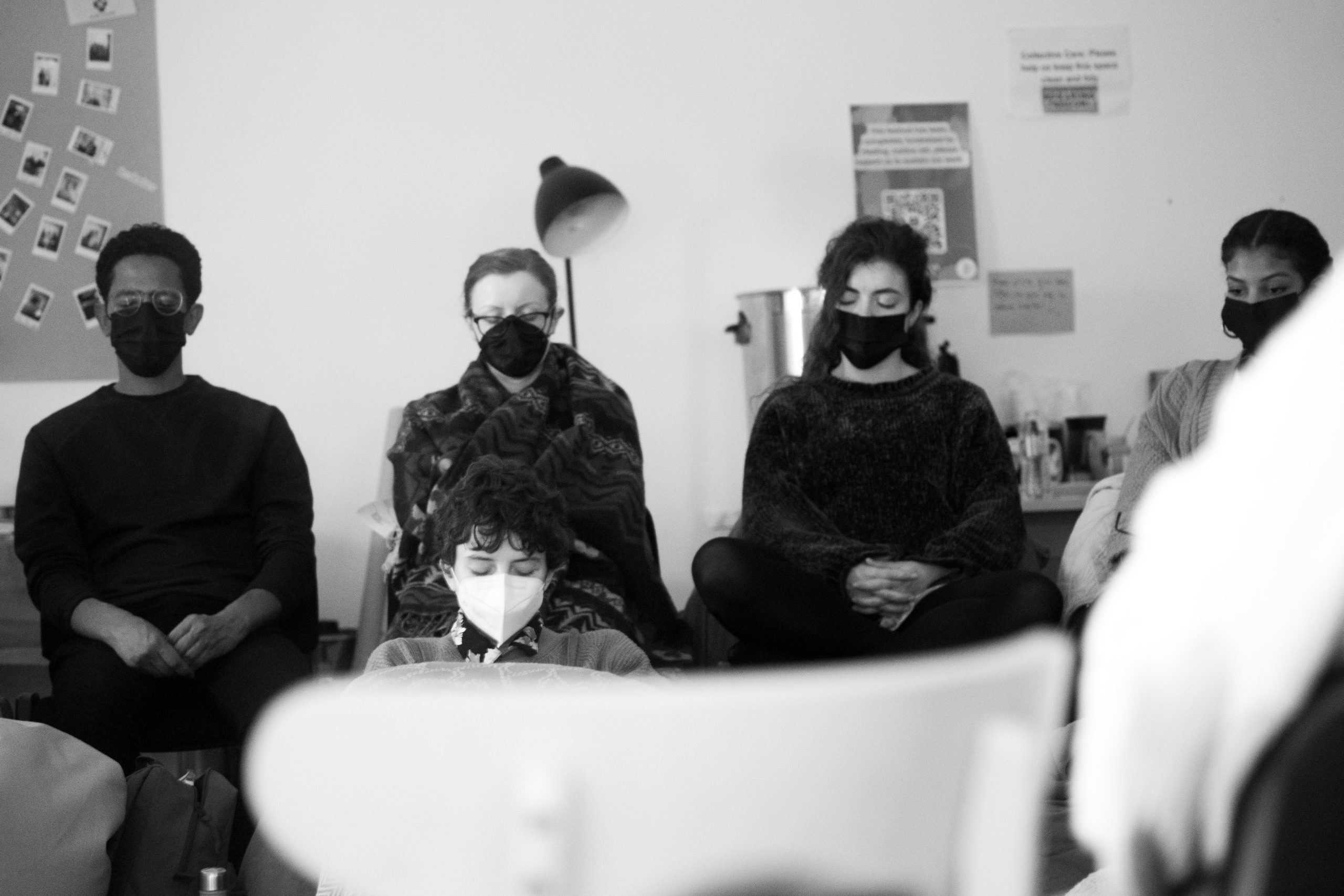
Breath Circle for Collective Capacity
Our Breath Circle for Collective Capacity is a gathering space for grounding. We hold this regular space for light stretching, breathing and meditative practice.
The Power of Somatics for Collective Transformation
A discussion about the need and potential of somatics in our social justice movements.
Community Agreements
Guidance for how we show up together in HJL spaces.
So you want to research Palestine?
Researching Palestine as an anti-Zionist academic and mental health practitioner situated in the Global North
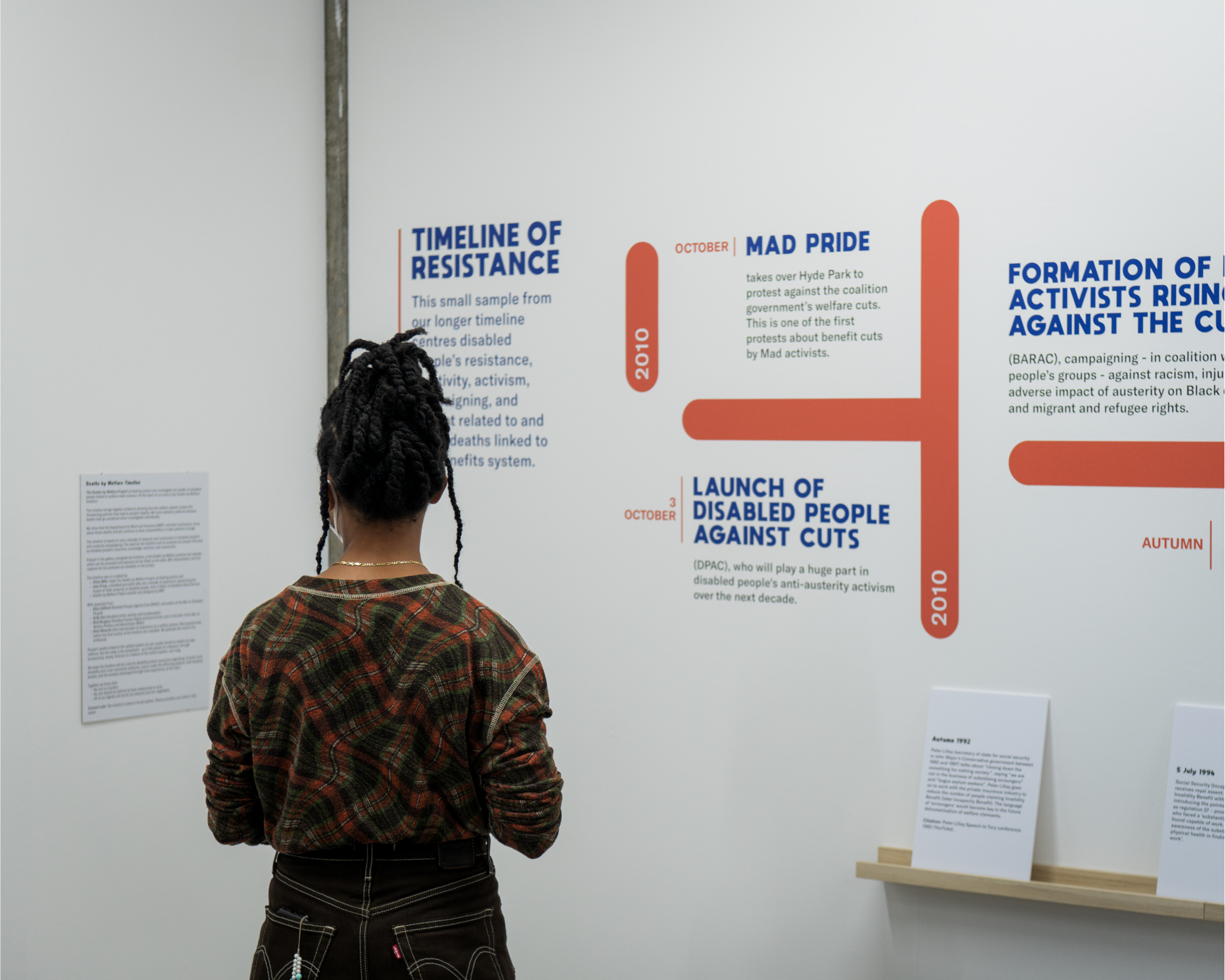
Life-Affirming Research at HJL
Exploring the role of research in building life-affirming, participatory, and collaborative visions of community-led health.