Holistic expeditions of a somatic cartographer
The body is a landscape – an exploration by Evie Muir

By Evie Muir
Commissioned by Micha Frazer-Carroll
“The body is a landscape”, my acupuncturist tells me as she reads the crumpled map of my flesh, index and forefinger placed gently on the small of my wrist. She nods reassuringly as the energetic pulse beneath my skin tells her what we both know: a block. A huge one. Gigantic, she says. It explains why my kidneys are empty. Explains the lower back ache, brain fog, sleepless nights, intense premenstrual symptoms. Two pins in the inner corner of my eyes, followed by a swell of emotions – sometimes anger, often tears. But mostly relief. She pokes pins into the swamp of my inner thighs before sending me out into the world with more agency than before. Control regained.
The body is a landscape and it remembers more suffering than my hippocampus has previously allowed. My neck has felt inflamed with a fiery pain for some time and during a meditation retreat there is concern about its immobility. With the help of a Buddhist monk I dedicate time to breathing into the pain and listening to the messages it is trying to convey. Buckling under the weight of my brain, it tells me how it throbs with the grief of generations, and reminds me there is much to tend to. With every electric spasm and clenched jaw I am called back onto a path that I seem to regularly stray from.
The body is a landscape and there are areas that are overpopulated. Laid in an allotment with my embodied practitioner guiding me on Zoom I enter my womb and find it to be intensely overcrowded with guests who, though once invited, have outstayed their welcome. A spring clean is required. We identify that my abusers also still reside there, wearing the masks of protectors, and I feel the complexity of their presence in the twisted beating of my chest. Hawthorn, they recommend. Good for hearts that have had their love misplaced.
The body is a landscape and with my kinesiologist’s skill I am rendered speechless at the vulnerability of being seen and heard without a verbal conversation being uttered. The resistance of my arms against the gentle pressure he applies traces desire lines in mid-air. Fear of the unknown presents itself once again as a recurring prognosis and he recommends a list of herbal remedies; aspen, walnut, and hawthorn. Good for hearts that have had their love misplaced. And I leave with more agency than I entered with.
The body is a landscape and my internal ecosystem is fragile. A looming cumulonimbus eclipses rational thought and threatens to unleash lashings of emotion. I marvel at the water within all of us and yet find myself regularly terrified of drowning from within. Unsurprising, then, that it’s always a river’s buoyancy that is able to suspend me between death and aliveness, bringing me home to myself so I too return to shore. Equilibrium restored. Control regained.
The body is a landscape and for too long I have been lost

            Unable to orient within the terrain of myself.

                                        Using the cognitive compass of colonisers

And etching desperate paths into my skin, hoping to stumble across shortcuts to release.

             But the path is long and the journey must be traversed with care.

                         A care the land gifts freely.

         A care held in the wisdoms of ancient practice.

                                             A care that returns the misplaced love of heavy hearts.
–
Evie Muir (she/they) is a nature writer and founder of Peaks of Colour – a Peak District-based nature for healing community group, by and for people of colour only that explores alternative routes to healing and justice for survivors of gendered and racialised trauma. Their debut book, Radical Rest, explores activist burnout through a Black Feminist, abolitionist and nature-allied lens, and will be published by Elliot & Thompson on the 18th July 2024.
Related
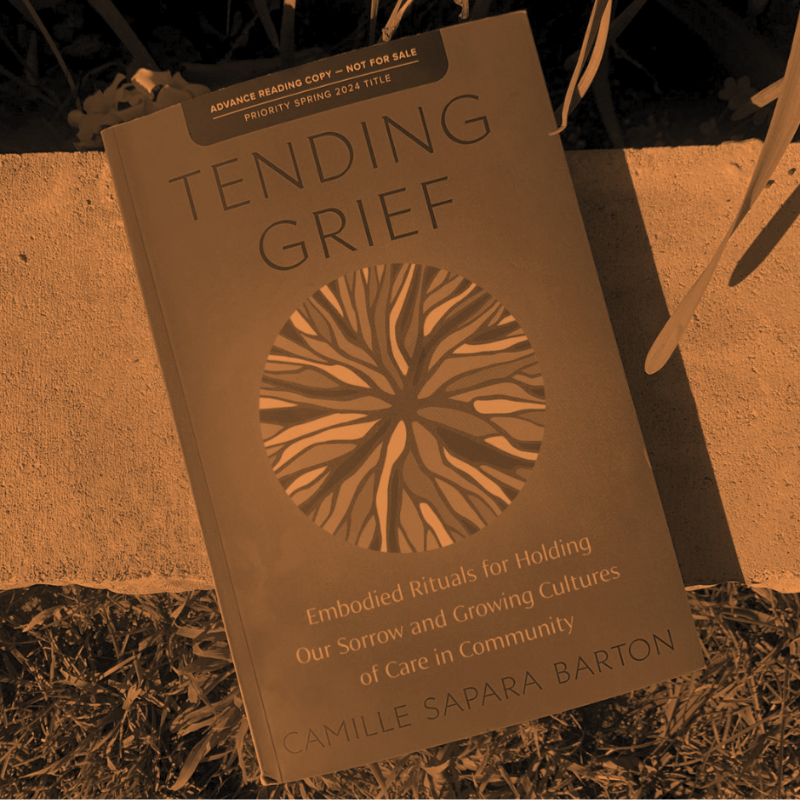
Why we need grief in our social movements
The Dagara people see regular grief tending as necessary for the health of the community. Why don’t we do the same? asks Camille Sapara Baron in this excerpt from their book Tending Grief
How do you feel?
A poem by Jolien Van Goethem
Intersectional alchemy
A poem by Marai Larasi
Second Lives
Musings on a second life by Chloe-Louise Adegoke and illustrations by Isha Joy
Care Under Capitalism: the work of health and sex
Care Under Capitalism — the work of health and sex by S.N.H.