Companions in pain
Connecting and healing with SWANA Healing
By Rose Eskafi
Commissioned by Micha Frazer Carroll
Images from Elu and SWANA Healing
In Farsi, the word “ham-dard” (همدرد) is a compound of the words ham (هم) meaning “together” and dard (درد) meaning “pain” or “suffering”. Ham-dard, translates to “co-sufferer” or “companion in pain”. In a broader social sense, the word reflects a cultural value of solidarity and communal support. It signifies a culture where people are expected to support each other in times of need, reflecting a collective identity and mutual care. It embodies an approach to life where people deeply connect with and care for each other’s emotional well-being.
This is the essence of SWANA Healing, an online space which hosts free remote group sessions dedicated to healing through mindfulness, storytelling and art. SWANA Healing is all about reconnecting, reclaiming and rehearsing our ancestral ways of life as a way to heal and sustain ourselves today.
We use the term SWANA – which stands for South West Asian and North African – instead of “Middle Eastern”, rejecting the eurocentric connotations it brings in favour of a more inclusive term that acknowledges the diversity of cultures, languages, and identities within the land.
We run as a self-sustaining ecosystem: we provide free mental wellness access to Women and LGBTQIA people and offer income opportunities to artists and practitioners from the SWANA region. SWANA Healing’s circular fundraising model encourages collaboration, empowers individuals, and creates a more sustainable path towards mental well-being for the SWANA community.
Our global community connects from all corners of the world, at all hours of the day. Some members join just as they wake up, while others are just winding down. We’ve had people join from inside the club and others just as they get home. Some are in the car during their lunch break, and others are sitting at their desks.
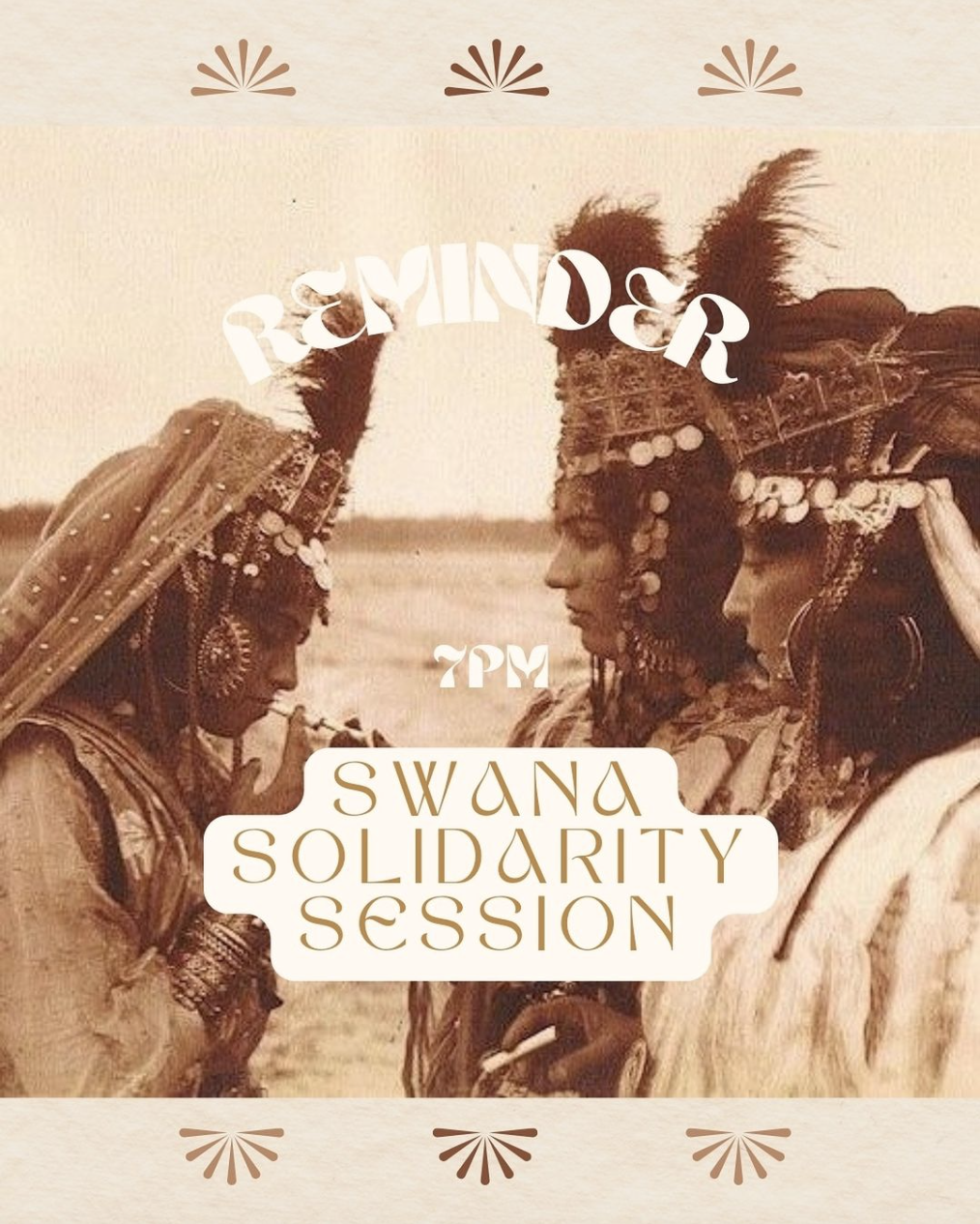
The project was founded by Elu, a multi-disciplinary artist and traditional practitioner of Zaza Alevi heritage. As a sun child of the Kurdish diaspora, her work manifests through living and preserving ancestral and analog traditions such as tattooing, printing, dyeing and weaving by hand. In her work, Elu aims to create a bridge between the ancestral world and the modern, honouring handmade tradition and craftsmanship as the foundation of contemporary space. Seeing culture as an active collective praxis, she uses art as a bridge for social change and a form of resistance.
As a trauma-informed mindfulness practitioner, I facilitate the weekly community sessions. In these sessions, we begin with an introduction to each other before moving to mindfulness meditation or a visualisation as a way to ground and arrive in the space together. Afterwards, we share what came up for us or what feels alive in our bodies in that moment. Every session looks different but what remains the same is the solidarity and compassion we hold for each other, whether we’re talking about Palestine, Sudan, Lebanon, Afghanistan, Kurdistan, Iran or other. The space is there as a soft landing space amidst the suffering–a place people can come and connect to themselves, their bodies and each other.
Elu and I had discussed why retreats and healing circles are so expensive, and came to the same conclusion that our people need access to healing as a basic human right – something that centres slowing down, somatic work and community as acts of resistance and restoration.
We know we’re not solely defined by our biology or psychological characteristics, but are deeply affected by our social context, relationships, and environment. Being away from our land, our climate, our family. We know what it means to come from people who have endured so much. Through meditation and storytelling, we make room for the things that often get minimised or overlooked in the urgency of our care and advocacy: friendship losses, outbursts of rage, chronic illnesses, family wounds, and activism burnout. Despite the pain, week after week, every person shows up with an inherent warmth, familiarity, and sense of humour that anyone with a SWANA friend can attest to.
You can stay in touch with us or apply to join our group here.
Related
Compromised – Surviving In Isolation
Abstract digital illustration of a family keeping each other safe by Amaranthia Sepia
Cereus Villa
Our Joy
Collages of trans joy by Andi O-K
Spacemaking as Sanctuary // Water Memory 🌊
An exploration in worldbuilding and remembering alternative infrastructures
CripPleasurePower
An experimental documentary essay that explores the possibilities of aligning your pleasures with your values
Somos fuego: Amulets from the Locus* project
Amulets made by participants of the Locus* art workshop with Nada Colectivo

The Light Between the Shadows
A photo series of light and shadows taken during Dianna O’Shannon’s stay in a psychiatric unit

A Juicy and Definitely Scientific Qualitative and Quantitative Comparison of Cure vs. Care
Poetry of care by Miriam Saperstein