Maramiya
A painting by Aisha Noble
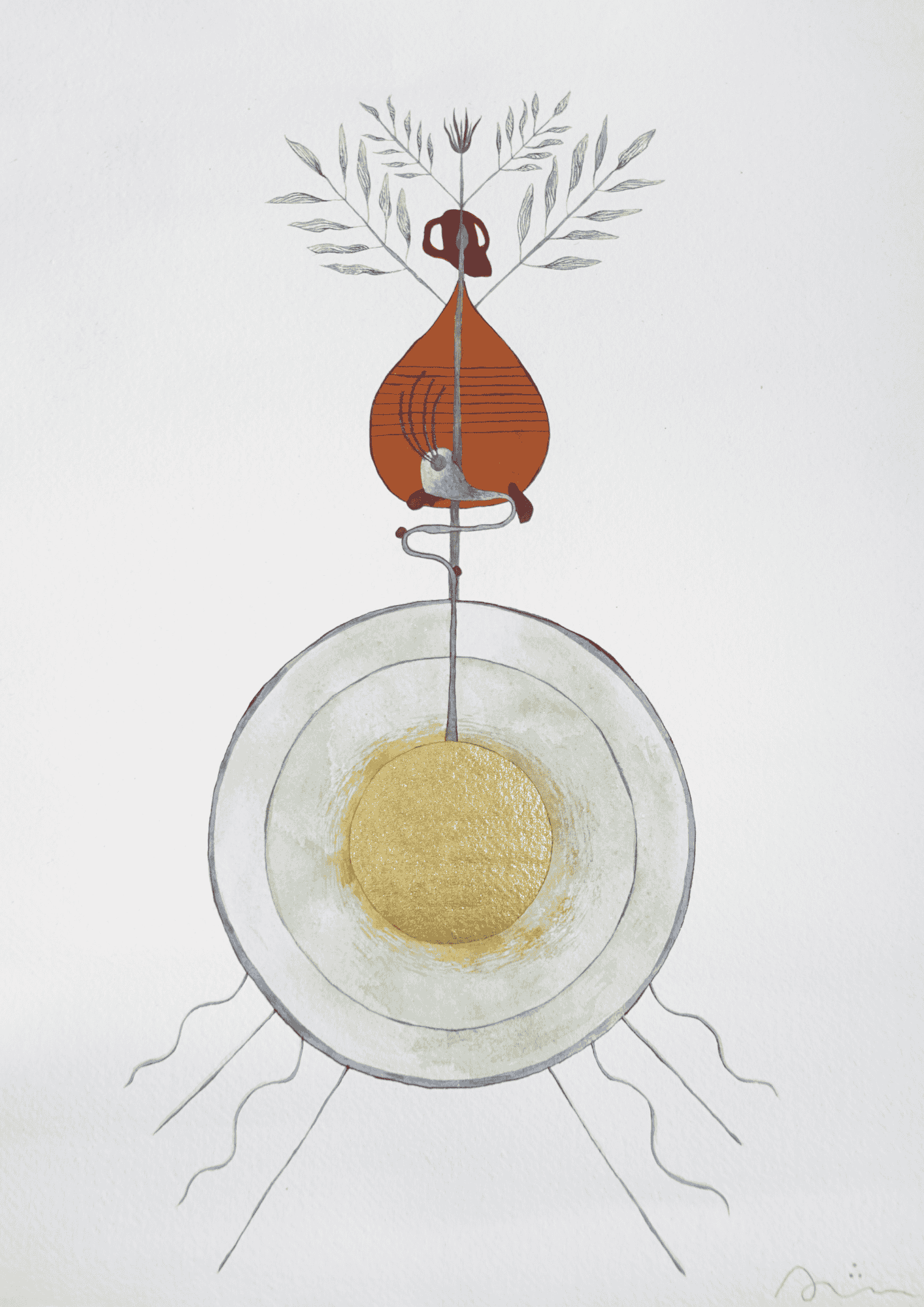
In Palestine, almost every household will have a pot of dried sage in their cupboards. For thousands of years the plant has been used widely for its healing properties. Sage tea is regularly recommended as a cure for illnesses and pains. Some say the plant’s name in Arabic, Maramiya, the Virgin Mary (Maryam). While escaping from King Herod, Mary is said to have rested by a sage bush. She was travelling with her son Jesus (`Īsa/ Yasū`) and had become exhausted. She broke a branch off and wiped her face with the leaves. The scent soothed her. She then turned to the sage plant and said, “till eternity, you will be a blessed plant.” There is ample lore about the sage plant in Palestine and beyond. The plant is embedded in both the landscape and culture. One result of the persistent attempts by Israeli Occupation Forces to uproot and detach Palestinians from their land and culture has been the policing of Palestinians foraging and growing plants such as sage. For foraging, this can mean anything from heavy fines to imprisonment. With regards to agriculture, in Gaza, Israel has destroyed most arable land. In many cases Gaza’s farming land has been permanently poisoned with white phosphorus. In the West Bank farmers are at risk of having whole crops destroyed or annexed and redistributed to Israeli settlers. Many of us will have seen harrowing images of Palestinian farmers mourning their olive trees after settlers have burnt or cut them down. Of course this is a mourning of their livelihood, but it is largely a grief that comes from the loss of ancestral memory and connection to the land. Historically, Palestinians have seen themselves as stewards of a holy land. There is little ego in Palestinians’ perception of their role on the land. Thus, to have a settler state that has doesn’t seem to have any qualms about destroying one of the most sacred aspects of Palestine, its earth and all it produces, is one of the most insulting and painful features of Palestine’s current occupiers. For many Palestinians, cultivating crops like sage in defiance of the occupation is a form of resistance as powerful and significant as any other.
Related
Assisted Suicide / Assisted Joy
Dolly Sen’s disability justice art is aesthetically cool, but emotionally on fire

CripPleasurePower
An experimental documentary essay that explores the possibilities of aligning your pleasures with your values

Community grieving in the endz
Sara Bafo shares her reflections on grief and healing in the endz
Beyond Pills: Mapping Community Care through Memorabilia
A photo essay by Divya Mahatme exploring moments where care is both a gift and a loss.
We keep each other safe
Han Gunji’s illustration on radical health and healing using the metaphor of mutually beneficial flowers